Company Information
 Member Since 8 Years
 Nature of Business Retailer
Ask for more detail from the seller
Contact Supplier
Water and Foam
Water and Foam fire extinguishers extinguish the fire by taking away the heat element of the fire triangle. Foam agents also separate the oxygen element from the other elements.
Water extinguishers are for Class A fires only - they should not be used on Class B or C fires. The discharge stream could spread the flammable liquid in a Class B fire or could create a shock hazard on a Class C fire.
Carbon Dioxide
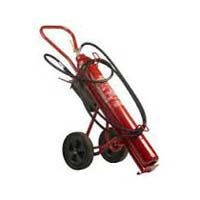
Carbon Dioxide fire extinguishers extinguish fire by taking away the oxygen element of the fire triangle and also be removing the heat with a very cold discharge.
Carbon dioxide can be used on Class B & C fires. They are usually ineffective on Class A fires.
Dry Chemical
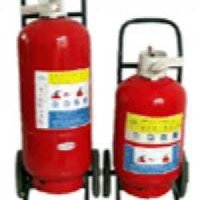
Dry Chemical fire extinguishers extinguish the fire primarily by interrupting thechemical reaction of the fire triangle.
Today's most widely used type of fire extinguisher is the multipurpose dry chemical that is effective on Class A, B, and C fires. This agent also works by creating a barrier between the oxygen element and the fuel element on Class A fires.
Ordinary dry chemical is for Class B & C fires only. It is important to use the correct extinguisher for the type of fuel! Using the incorrect agent can allow the fire to re-ignite after apparently being extinguished successfully.
Wet Chemical
Wet Chemical is a new agent that extinguishes the fire by removing the heat of the fire triangle and prevents re-ignition by creating a barrier between the oxygen and fuelelements.
Wet chemical of Class K extinguishers were developed for modern, high efficiency deep fat fryers in commercial cooking operations. Some may also be used on Class A fires in commercial kitchens.
Clean Agent
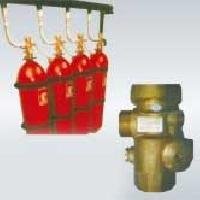
Halogenated or Clean Agent extinguishers include the halon agents as well as the newer and less ozone depleting halocarbon agents. They extinguish the fire by interrupting the chemical reaction of the fire triangle.
Clean agent extinguishers are primarily for Class B & C fires. Some larger clean agent extinguishers can be used on Class A, B, and C fires.
Dry Powder
Dry Powder extinguishers are similar to dry chemical except that they extinguish the fire by separating the fuel from the oxygen element or by removing the heat element of the fire triangle.
However, dry powder extinguishers are for Class D or combustible metal fires, only. They are ineffective on all other classes of fires.
Water Mist
Water Mist extinguishers are a recent development that extinguish the fire by taking away the heat element of the fire triangle. They are an alternative to the clean agent extinguishers where contamination is a concern.
Water mist extinguishers are primarily for Class A fires, although they are safe for use on Class C fires as well.
Cartridge Operated Dry Chemical
Cartridge Operated Dry Chemical fire extinguishers extinguish the fire primarily by interrupting the chemical reaction of the fire triangle.
Like the stored pressure dry chemical extinguishers, the multipurpose dry chemical is effective on Class A, B, and C fires. This agent also works by creating a barrier between the oxygen element and the fuel element on Class A fires.
Ordinary dry chemical is for Class B & C fires only. It is important to use the correct extinguisher for the type of fuel! Using the incorrect agent can allow the fire to re-ignite after apparently being extinguished successfully.



 350 - 550/ Piece


Connect with us





 For Buyer
  For Seller
  Help
Help 
 Ghodbunder Road, Thane, Maharashtra
  Send Enquiry