

Company Information
 Member Since 7 Years
 Nature of Business Retailer
Ask for more detail from the seller
Contact Supplier
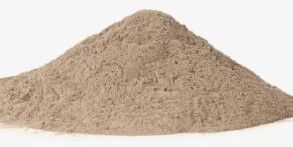
Fly ash is produced from the burning of pulverized coal in a coal-fired boiler. It is a fine-grained, powdery particulate material that is carried off in the flue gas and normally collected from the flue gas by means of electrostatic precipitators , baghouses, or mechanical collection devices such as cyclones.Fly ash is commonly used in production of concrete. It is applied as a supplementary cementing material. Initially the idea was to use fly ash for economical reasons – on one hand to utilize fly ash which is an industrial by product, on the other to reduce the amount of costly cement. However, it appears that application of fly ash in concrete has a lot of benefits, mainly by reduction of unwanted hydration heat.Cement can be replaced with fly ash in concrete. It reacts (Si) with Ca(OH)2 and produces more CSH gel which contributes to strength. With reduced cement, hydration heat will be reduced and hence there is strength gain.Uses and benefits of fly ashUses:The most common use of fly ash is as a partial replacement for Portland cement used in producing concrete. Replacement rates normally run between 20% to 30%, but can be higher.Fly ash produced by coal-fired power plants provides an excellent prime material used in blended cement, mosaic tiles, and hollow blocks among others.Fly ash is an inexpensive replacement for Portland cement in concrete and using it improves strength, segregation and ease.Fly ash can be used as prime material in blocks, paving or bricks; however, one of the most important applications is PCC pavement. PCC pavements use a large amount of concrete and substituting fly ash provides significant economic benefits. Fly ash has also been used for paving roads and as embankment and mine fills, and its gaining acceptance by the government , specifically the Highway Administration.Fly ash reacts as a pozzolan with the lime in cement as it hydrates, creating more of the durable binder that holds concrete together
Test report of FLY ASH-ASTM C 618
| Sr No | Parametrs | Unit | Result Obtained | Protocol | CAS NO |
| 1 | Loss on Ignition | % | 0.5 | ASTM C-311 | NA |
| 2 | Silica as Sio2 | % | 55.32 | ASTM C-311 | 60676-86-0 |
| 3 | Aluminia as Al2O3 | % | 21.7 | ASTM C-311 | 1344-28-1 |
| 4 | Titnia as TiO2 | % | 1.35 | ASTM C-311 | 12137-20-1 |
| 5 | Iron as Fe2O3 | % | 8.43 | ASTM C-311 | 1309-37-1 |
| 6 | Calcium as CaO | % | 4.72 | ASTM C-311 | 1305-78-8 |
| 7 | Magnesium as MgO | % | 2.45 | ASTM C-311 | 1309-48-4 |
| 8 | Sodium as Na2O | % | 1.86 | ASTM C-311 | 1313-59-3 |
| 9 | Potassium as K2O | % | 1.36 | ASTM C-311 | 12136-45-7 |
| 10 | Sulphur Trioxide as SO3 | % | 0.24 | ASTM C-311 | 7440-38-2 |
| 11 | Manganese as MnO | % | 0.15 | ASTM C-311 | 1344-43-0 |
| 12 | Chrolide as CL | % | Less than 0.10 | ASTM C-311 | 16887-00-6 |
| 13 | Residue on 45 Micron seieve | % | 15.54 | ASTM C-311 | NA |
| 14 | Moisture | % | Less than 0.10 | ASTM C-311 | 7732-18-5 |
Download Table
Test report of FLY ASH-BS 3892-BEIGE
| Sr No | Parametrs | Unit | Result Obtained | Protocol |
| 1 | Loss on Ignition | % | <1 | ASTM C 114-2013 |
| 2 | Silica as Sio2 | % | 55.13 | ASTM C 114-2013 |
| 3 | Aluminia as Al2O3 | % | 24.45 | ASTM C 114-2013 |
| 4 | Titnia as TiO2 | % | 1.23 | ASTM C-314 |
| 5 | Iron as Fe2O3 | % | 7.43 | ASTM C 114-2013 |
| 6 | Calcium as CaO | % | 3.54 | ASTM C 311 |
| 7 | Magnesium as MgO | % | 2.73 | ASTM C 311 |
| 2 | Sodium as Na2O | % | 0.75 | ASTM C 114-2013 |
| 3 | Potassium as K2O | % | 1.02 | ASTM C 114-2013 |
| 4 | Sulphur Trioxide as SO3 | % | 0.35 | ASTM C 114-2013 |
| 5 | Chrolide as CL | % | 0.01 | ASTM C 311 |
| 6 | Residue on 45 Micron seieve | % | <12 | ASTM C 311 |
| 7 | Moisture | % | <1 | ASTM C 311 |



Connect with us





 For Buyer
  For Seller
  Help
Help 

 Tagore Road, Gandhidham, Gujarat
 Send Enquiry