
Company Information
 Member Since 15 Years
 Nature of Business Retailer
 GST No. 27AAIPB6904A1Z9
Ask for more detail from the seller
Contact Supplier
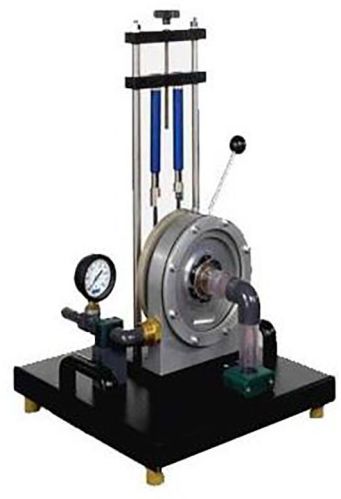
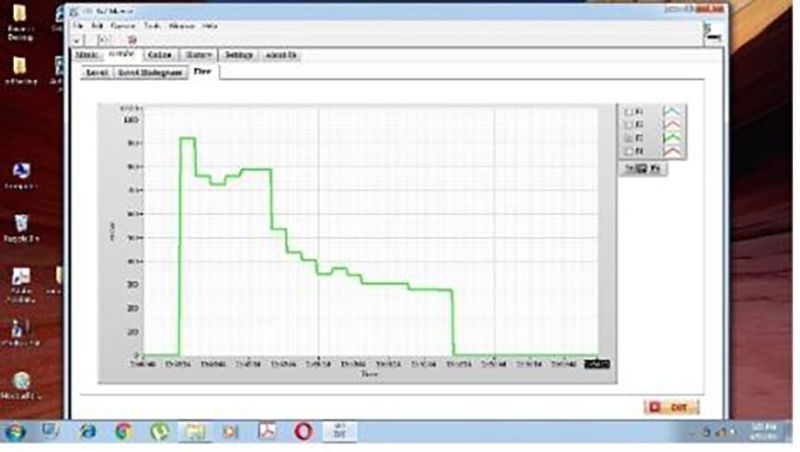
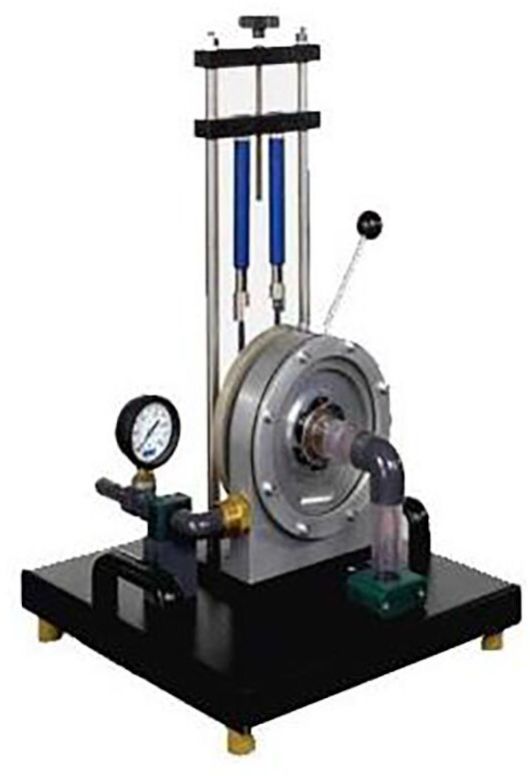
Francis turbine is a radial flow reaction turbine. Energy of water is transferred to the turbine runner by changes in both velocity and pressure. Water enters the turbine unit circumferentially through the spiral turbine casing. It enters the periphery of the stationary guide vanes and flows radially inwards through the runner. After passing through the runner, flow is discharged nearly axially through a draft tube before entering the tail race. The torque developed in the runner is converted into useful work. Francis turbines are used in hydro-electric power plants operating with water source available at medium heads (say, 15 to 300m of water) and volume flow rates. It is essential for students to understand the operation and performance characteristics of Francis turbines. Sci-tech Francis Turbine Demonstrator Trainer Model FM 21 is an experimental set-up necessary for any hydraulic machinery and fluid mechanics laboratory of an educational institution. The Sci-tech Francis Turbine Demonstrator Trainer Model FM 21 has been designed to enable students to study the operation and performance characteristics of a typical single stage Francis turbine. The unit has a sump tank and a centrifugal pump driven by electric motor to supply and re-circulate water. The turbine is mounted with the axis horizontal on the top of the robust mobile frame. Water enters the turbine casing through a variable area flow meter. A hand operated valve is provided at the inlet to control inlet head and flow rate. Inlet head is measured using a pressure gauge. After passing through the stationary guide vanes and runner, water is discharged through tube to the sump tank. A ring mechanism is provided to vary the position of inlet guide vanes. The flow rate though the runner can be controlled by operating inlet guide vanes. Transparent observation window is provided to see operation of inlet guide vane mechanism. Power generated in the turbine is absorbed by a disc brake dynamometer and the torque is measured using load cells. Turbine shaft speed is measured using digital tachometer. Instrumentation and control panel is included. The complete unit is manufactured from corrosion resistant materials. The Sci-tech Francis TurbineDemonstration Apparatus Model FM 21 is an important experimental set-up for any Fluid Mechanics and Hydraulics Laboratory of an educational institution. Optional ‘Sci-Cal’ Computer based learning software is included to enable students understand and conduct experiments, tabulate results and plot graphs. List of Experiments 1. Study of construction of Francis Turbine 2. Determination constant head characteristics curve 3. Determination of constant speed characteristics curves 4. Determination of constant efficiency curves. Important Features and Specifications: Standard Model: Turbine: output: 35W at 3000rpm, Water rate @. 40L/min, H=0.8m Impeller Impeller blades: 10 Impeller dia: 20mm Impeller inlet height: 14.5mm Impeller outlet dia: 50mm Guide vanes: 6 adjustable with positioning marks Measuring ranges Braking force: 20N Pressure Gauge: 0...5bar High Capacity Model: Functional model of Francis turbine, with a distributor with adjustable guide vanes that allows to control the water angle of incidence of the turbine: Diameter of the turbine: 52 mm. Speed range: 0-1200 r.p.m. approx. Rotor: Number of blades of the turbine: 15. Stator: Number of adjustable guide vanes of the distributor: 10. Braking system: Band brake with adjustable braking tension. Load cell-force sensor, range: 0-20N. Computer controlled water pump, with variable speed: Maximum height: 70 m. Maximum pressure: 7 bar. Maximum water flow: 120 l./min. Power: 1.5 kW. Transparent wa



Connect with us





 For Buyer
  For Seller
  Help
Help 

 Dahisar, Mumbai, Maharashtra
 Send Enquiry