


Company Information
 Member Since 5 Years
 Nature of Business Manufacturer
Ask for more detail from the seller
Contact Supplier
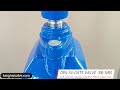
A gate valve is a gate plate of an opening and closing part. The movement direction of the gate plate is perpendicular to the direction of the fluid. The gate valve can only be fully opened and fully closed, and cannot be adjusted or throttled. The gate valve is sealed by the contact of the valve seat and the gate plate. Usually, the sealing surface will be welded with metal materials to increase wear resistance, such as 1Cr13, STL6, stainless steel, etc. The gate has a rigid gate and an elastic gate. According to the different gate plates, the gate valve is divided into a rigid gate valve and an elastic gate valve.
Area of application
Marine industry, Water supply & drainage, fire fighting, shipbuilding, water treatment, power stations, energy, food, chemical, and other systems
Actuation
Worm-gear/hand-wheel
Electric-actuator
Pneumatic-actuator
Hydraulic-actuator
Gate valve features
Advantages:
Low flow resistance.
Less effort when opening and closing.
Large height and long opening and closing time.
Water hammer phenomenon is not easy to produce. The reason is the long shutdown time.
The medium can flow in any direction on both sides, easy to install.
The structure length is small.
The shape is simple, the structure length is short, the manufacturing process is good, and the application range is wide.
The structure is compact, the valve has good rigidity, the channel is smooth, the flow resistance is small, the sealing surface is made of stainless steel and hard alloy, and the service life is long. The use of PTFE packing is reliable and easy to operate.
Disadvantages
The overall dimensions and opening height are large. The space required for installation is large.
During the opening and closing process, there is relative friction between the sealing surfaces, which can easily cause scratches.
Gate valves generally have two sealing surfaces, adding some difficulties to processing, grinding and maintenance.




Connect with us





 For Buyer
  For Seller
  Help
Help 
 Tianjin
  Send Enquiry