
Company Information
 Member Since 11 Years
 Nature of Business Supplier
Ask for more detail from the seller
Contact Supplier
This warming essential oil is often used in hot compress, used in vaporizers, blended in massage oil or in bath, lotions and cold relieve creams.
FOR EXTERNAL USE ONLY!
Origin: India
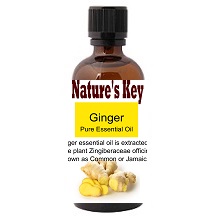
Ginger essential oilGinger essential oil is extracted from the fresh root of the plant Zingiberaceae officinale of the Zingiberaceae family and is also known as Commonly known as Ginger.
This warming essential oil is often used for digestive problems, as well as nausea – be that morning sickness or travel upset. It is also of value when treating colds and flu and especially for catarrhal lung conditions and rheumatic pain. It can also be used on the skin to help clear bruises.
Oil properties
Ginger essential oil can vary in color from pale yellow to a darker amber color and the viscosity also ranges from medium to watery. It is a strong smelling oil – spicy, sharp, warm and with a hint of lemon and pepper, which smells of actual ginger.
Origin
The plant is said to originate from India, China and Java, yet is also native to Africa and the West Indies. It was most likely brought to Europe between the 10th and 15th century as a condiment and spice.
Ginger is a perennial herb and grows to about 3 – 4 feet high with a thick spreading tuberous rhizome. Every year it shoots up a stalk with narrow spear-shaped leaves, as well as white or yellow flowers growing directly from the root.
It has been used as a medicine since very early times and is recorded in both Sanskrit and Chinese texts and is also mentioned in the literature of the ancient Greeks, Romans, and Arabians.
Asian medicine uses dried ginger for stomach problems such as stomach-ache, diarrhea, and nausea. The Chinese also use it to boost the heart and to help with mucus and phlegm.
The name ginger is said to be derived from the Gingi district in India, where tea made from ginger is used for stomach upsets.
Extraction
The essential oil is extracted by means of steam distillation from the unpeeled fresh or dried, ground-up root (rhizome) of the plant, and can yield about 2 – 4 % oil.
Chemical composition
The essential oil has various chemical constituents including the following: a-pinene, camphene, b-pinene, 1,8-cineole, linalool, borneol, y-terpineol, nerol, neral, geraniol, geranial, geranyl acetate, b-bisabolene and zingiberene.
Precautions
Ginger essential oil is non-toxic and non-irritant (except when used in high concentrations) but could irritate sensitive skins and can also cause photosensitivity.
Therapeutic properties
The therapeutic properties of Ginger essential oil are analgesic, anti-emetic, antiseptic, antispasmodic, bactericidal, carminative, cephalic, expectorant, febrifuge, laxative, rubefacient, stimulant, stomachic, sudorific and tonic.
Uses
Ginger essential oil is used in the treatment of fractures, rheumatism, arthritis, bruising, carbuncles, nausea, hangovers, travel and sea sickness, colds and flu, catarrh, congestion, coughs, sinusitis, sores on the skin, sore throat, diarrhea, colic, cramps, chills and fever.



Connect with us





 For Buyer
  For Seller
  Help
Help 
 United Arab Emirates
  Send Enquiry