
Company Information
 Member Since 14 Years
 Nature of Business Manufacturer
Ask for more detail from the seller
Contact Supplier
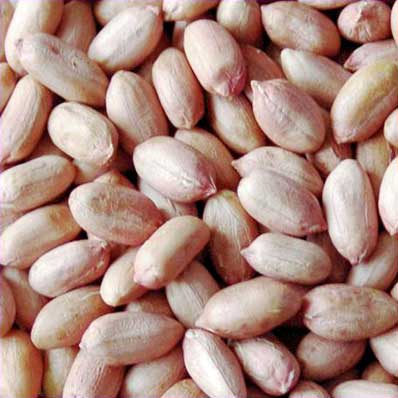
We are offering groundnut seeds.
the orange-veined, yellow-petaled, pea-like flower of the arachis hypogaea is borne in axillary clusters above ground. Following self-pollination, the flowers fade and wither. The stalk at the base of the ovary, called the pedicel, elongates rapidly, and turns downward to bury the fruits several inches in the ground, where they complete their development. The entire plant, including most of the roots, is removed from the soil during harvesting.
the pods act in nutrient absorption. The fruits have wrinkled shells that are constricted between pairs of the one to four (usually two) seeds per pod.
peanuts grow best in light, sandy loam soil. They require five months of warm weather, and an annual rainfall of 500 to 1,000 mm (20 to 39 in) or the equivalent in irrigation water.
the pods ripen 120 to 150 days after the seeds are planted. If the crop is harvested too early, the pods will be unripe. If they are harvested late, the pods will snap off at the stalk, and will remain in the soil.
peanuts are particularly susceptible to contamination during growth and storage. Poor storage of peanuts can lead to an infection by the mold fungus aspergillus flavus, releasing the toxic and highly carcinogenic substance aflatoxin. The aflatoxin-producing molds exist throughout the peanut growing areas and may produce aflatoxin in peanuts when conditions are favorable to fungal growth.
harvesting occurs in two stages. In mechanized systems, a machine is used to cut off the main root of the peanut plant by cutting through the soil just below the level of the peanut pods. The machine lifts the "bush" from the ground and shakes it, then inverts the bush, leaving the plant upside down on the ground to keep the peanuts out of the soil. This allows the peanuts to dry slowly to a bit less than a third of their original moisture level over a period of three to four days. Traditionally, peanuts are pulled and inverted by hand.
after the peanuts have dried sufficiently, they are threshed, removing the peanut pods from the rest of the bush.



Connect with us





 For Buyer
  For Seller
  Help
Help 
 Cameroon
  Send Enquiry