
Company Information
 Member Since 6 Years
 Nature of Business Manufacturer
Ask for more detail from the seller
Contact Supplier
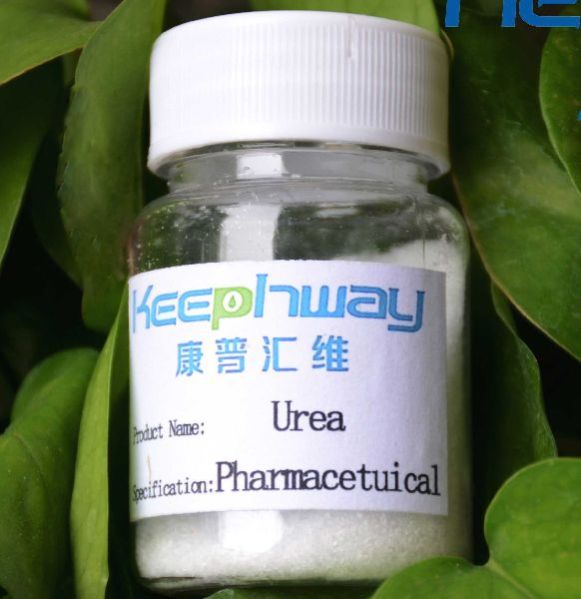
Among what we manufacture is Pharmaceutical Grade Urea. Urea-containing creams are used as topical dermatological products to promote rehydration of the skin. Urea 40% is indicated for psoriasis, xerosis, onychomycosis, ichthyosis, eczema, keratosis, keratoderma, corns, and calluses. If covered by an occlusive dressing, 40% urea preparations may also be used for nonsurgical debridement of nails. Urea 40% "dissolves the intercellular matrix"[10] of the nail plate. Only diseased or dystrophic nails are removed, as there is no effect on healthy portions of the nail. This drug is also used as an earwax removal aid.
Urea has also been studied as a diuretic. It was first used Dr. W. Friedrich in 1892. In a 2010 study of ICU patients, urea was used to treat euvolemic hyponatremia and was found a safe, inexpensive, and simple.
Like saline, urea injection has previously been used to perform abortion.
The blood urea nitrogen (BUN) test is a measure of the amount of nitrogen in the blood that comes from urea. It is used as a marker of renal function, though it is inferior to other markers such as creatinine because blood urea levels are influenced by other factors such as diet and dehydration.
Urea labeled with carbon-14 or carbon-13 is used in the urea breath test, which is used to detect the presence of the bacteria Helicobacter pylori (H. pylori) in the stomach and duodenum of humans, associated with peptic ulcers. The test detects the characteristic enzyme urease, produced by H. pylori, by a reaction that produces ammonia from urea. This increases the pH (reduces acidity) of the stomach environment around the bacteria. Similar bacteria species to H. pylori can be identified by the same test in animals such as apes, dogs, and cats (including big cats).
Synonyms: Carbamide resin; Isourea; Carbonyl diamide; Carbonyldiamine
CAS No.: 57-13-6
Molecular Weight: 60.06
Chemical Formula: (NH2)2CO
Appearance: White crystals or white powder.
Odor: Develops odor of ammonia.
Solubility: Very soluble in water.
Specific Gravity: 1.32 @ 20C/4C
pH: 7.2 (10% in water)
% Volatiles by volume @ 21C (70F): 0
Boiling Point: Decomposes.
Melting Point: 132 - 135C (270 - 275F)
Vapor Density (Air=1): No information found.
Vapor Pressure (mm Hg): No information found.
Evaporation Rate (BuAc=1): No information found.
Stability: Stable under ordinary conditions of use and storage.
Hazardous Decomposition Products: Urea decomposes upon heating and can form products including ammonia, oxides of nitrogen, cyanuric acid, cyanic acid, biuret, carbon dioxide.
Hazardous Polymerization: Will not occur.
Incompatibilities: Urea reacts with calcium hypochlorite or sodium hypochlorite to form the explosive nitrogen trichloride. It is incompatible with sodium nitrite, gallium perchlorate, strong oxidizing agents (permanganate, dichromate, nitrate, chlorine), phosphorus pentachloride, nitrosyl perchlorate, titanium tetrachloride and chromyl chloride.
Conditions to Avoid: Incompatibles.



Connect with us





 For Buyer
  For Seller
  Help
Help 
 Beijng
  Send Enquiry