
Company Information
 Member Since 11 Years
 Nature of Business Supplier
Ask for more detail from the seller
Contact Supplier
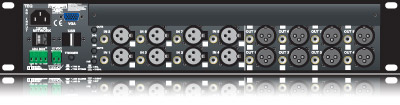
There are many different types of room correction technologies available for both home cinemas and dedicated two-channel listening rooms however none employ the incredibly unique Trinnov based room optimization technology. Trinnov, a name that stems from tri-innovation reflecting the most in depth study conducted on 3-dimensional acoustics, utilizes patented processes and techniques to accurately measure the loudspeakers' performance with respect to a room's acoustical profile. ADA's TEQ processes this data and while applying SMPT, RIAA or custom target curves, corrects position, elevation, phase, and amplitude among dozens of other parameters.
The measurement process utilizes ADA's Tetrahedral Acoustic Probe (TAP Microphone) that features four microphones mathematically placed to triangulate the position and elevation of each loudspeaker in the system. By aiming the TAP microphone at the center of the viewing surface (or stereo image), the TEQ knows not only which direction the front of the room is with respect to the microphone's position, but also the relative distance, azimuth and angle of the speakers. Several measurements can be taken for any one of the 30 presets and measurement points can be weighted, so while some points represent "money seats" others points help determine the room's acoustical footprint. The end result is room correction without "over correction" so common with most other systems.
While the TEQ-4 is intended for use in two-channel systems where four channels can be used for bi-amplified speakers, the TEQ-8 and TEQ-12 are ideal for home cinema. If your home cinema has more than the traditional 5.1 or 7.1 channel speaker array, then the TEQ with additional channels will come in handy (a TEQ-8 on a 5.1 system with additional speakers or a TEQ-12 on a 7.1 with additional speakers). The TEQ-8 and TEQ-12 offer unique re-mapping features. Here are some examples:
Center Channels - While perforated screens permit the positioning of the center channel (and perhaps right & left channels) directly behind the screen surface for optimal localization of vocals, non-perforated screens and flat panel displays make this impossible. By using two center channel speakers, one below the screen and one above the screen (two channels on the TEQ in addition to your other speakers), the TEQ will image the center channel directly in the middle of the viewing surface. Alternately, if the right and left speakers are at an elevation so that the top of these speakers is close to the top of the viewing surface while the center channel is below the screen, the TEQ can pull the center channel image up into the viewing surface using the right and left speakers.



Connect with us





 For Buyer
  For Seller
  Help
Help 
 United States
  Send Enquiry