
Company Information
 Member Since 10 Years
 Nature of Business Manufacturer Year of Establishment 1998
Ask for more detail from the seller
Contact Supplier
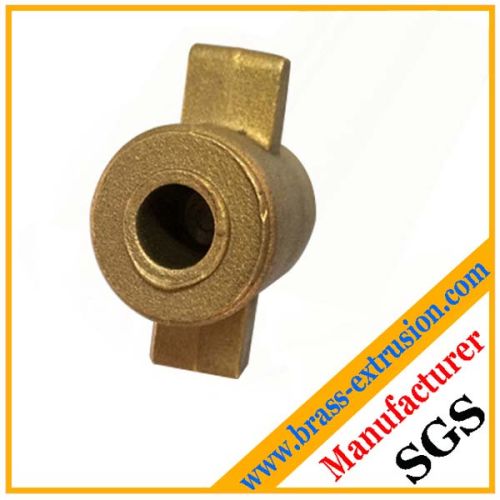
Forgings of copper and brass offer a number of outstanding advantages over parts produced by other manufacturing processes. These advantages result from the inherent properties of copper and copper alloys plus additional improvements in mechanical and physical properties imparted by the forging process.
High Strength
In making a forging, the metal is worked twice under tremendous pressures-first during rod extrusion and then during forging. The double working under pressure compacts the metal and produces a very dense and refined grain or fiber structure.
The tensile strength of the parts is thereby increased, and resistance to impact and abrasion is enhanced.
Leak Resistance
The dense non-porous forged metal permits the designer to specify thinner sections without the risk of leaks due to flaws and voids. Often the thinner forged parts result in lighter weight and lower piece cost compared to other forming processes.
Close Tolerances
A forging produced in a steel die with close tolerances offers several advantages. Overall part dimensions are held closer than in sand casting. Dimensions show minimum variation from part to part and permit automatic chucking and handling in subsequent operations. The precise designs on the die surface can produce sharp impressions on the forging surface, which is not economical with other forming pr



Connect with us





 For Buyer
  For Seller
  Help
Help 
 Shengzhou
 Send Enquiry