
Company Information
 Member Since 9 Years
 Nature of Business Retailer
Ask for more detail from the seller
Contact Supplier
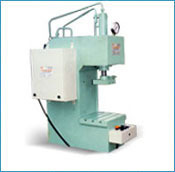
The hydraulic press continues to be the press of choice for today's modern manufacturers. The advantage of the hydraulic press versus mechanical presses is being realized and utilized by more and more manufacturers. Today's modern hydraulic presses provide; Performance, Reliability, and Unlimited Capability in almost any application. Stamping, Punching, Blanking, Drawing, Bending... All standard press designs and circuits can be configured to match even the most non-standard press requirements.
Brought to you by: sealing system hydraulic press company.
Hydraulic Press Benefits
1. Full Tonnage Throughout The Stroke - The hydraulic press has the ability to deliver full pressing force anywhere in the range of stroke, unlike mechanical presses which can only develop full force at close to bottom of stroke. This significantly adds to the inherent flexibility of hydraulic presses.
2. Dedicated or Multi-Functional - The hydraulic presses can be designed to any level of sophistication. Whether the need be a simple dedicated cell press or a fully integrated multi-purpose system, hydraulics are cost effective and easily modified for the task at hand. Their flexibility is further enhanced by additional stroke capability for simplifying die changes and reducing set-up time. Multiple dies with varying shut heights can be run efficiently in a single press
3. Lower Up Front Costs / Fast ROI - In regard to presses, hydraulic presses are the most simple in basic design and often utilize standardized, proven hydraulic components that are readily available. The basic components to mechanical presses, such as crankshafts, clutch and brake systems, etc., are expensive and often custom built components, which serve to add machine cost. Hydraulic presses are often much less expensive up-front and in long-term operation.
4. No Design Limitations - The principles of hydraulic force allow for creative engineering. Presses can be designed for traditional down acting, up-acting, side-acting and multi-action operation. Power systems can be placed above, below or remote from the press and force actuators. Large bed presses can be designed for low tonnage applications and small bed presses can be designed for high tonnage requirements.
5. Over-Pressure Protection - The incorporation of hydraulic relief valves into hydraulic circuits provide built-in overload protection. A press' force cannot exceed the pressure that it is allowed to build, thereby limiting the maximum pressure attainable controls maximum force.
6. Unlimited Control Options - The hydraulic press can be controlled in a variety of ways ranging from basic relays to more sophisticated PLC or PC control systems. Operator interfaces can be added to press systems to facilitate ease of job set by storing individual job parameters for each die. Presses can be controlled for precise pressure and position; including pressure holding, speed control and dynamic adjustments to real-time operating variances. Ram force and speed can be controlled in any direction with various levels of precision.



Connect with us





 For Buyer
  For Seller
  Help
Help 

 Irungattukottai, Chennai, Tamil Nadu
  Send Enquiry