
Company Information
 Member Since 11 Years
 Nature of Business Supplier Year of Establishment 2003
Ask for more detail from the seller
Contact Supplier
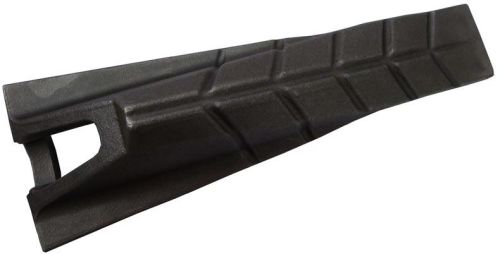
Investment casting is one of the oldest and perhaps the most versatile of the casting processes. Most any castable metal is available, and very intricate shapes can be produced. Common applications include jewelry, turbine blades and veins, valve bodies, and myriad other industrial components.
the process
a wax positive of the part to be cast is molded at low pressure in a tool. Investment cast tooling is generally made of aluminum. Advances in sla technology has enabled the investment caster to produce the models without tooling for prototyping purposes. The wax part is then attached to a wax “tree” which enables multiples to be cast at the same time. The tree then has a shell built around it which is composed of ceramic and silica. After the shell has been built in multiple layers, it is then “dewaxed” typically by placing it in a steam autoclave. The wax positive has now formed a cavity in the shell.
the shells are then fired in a furnace in order to burn out any remaining wax residue as well as to prevent the shell from cracking when exposed to molten metal. The shells are then poured with the specified alloy and allowed to cool. The shell is then mechanically removed from the tree and castings. Castings are then cut off of the tree and the tree material is recycled for the next pour. Grinding and machining operations are generally used to clean up the areas of the part where the metal entered, commonly known as the gate witness area.



Connect with us





 For Buyer
  For Seller
  Help
Help 
 China
China 
 Send Enquiry