
Company Information
 Member Since 6 Years
 Nature of Business Manufacturer
 GST No. 24**********ZS
Ask for more detail from the seller
Contact Supplier
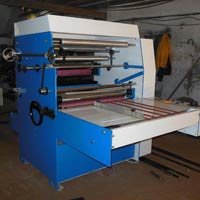
With wet laminations, the adhesive is applied to one substrate, usually by roller coating or air knife. The coated substrate is then nipped with another substrate, and the resulting laminate may then be left to air dry or passed through a heated oven to remove solvent and build bond strength.
The types of adhesive used for wet lamination are
waterborne natural products, such as starch and dextrin or waterborne synthetic latex products, such as polyvinyl acetate, acrylic, etc. 100% reactive liquids, such as polyurethanes or polyesters.Wet lamination via waterborne or solvent based adhesives is confined to applications where at least one substrate is porous (e.g., paper, cardboard, textiles) to facilitate drying. Once cured, bond strength is generally high enough to cause failure or tearing of the porous substrate. Most often, waterborne synthetic latex adhesives are utilized for wet bonding because of their high initial strength and fast drying characteristics when applied to porous substrates.
Dry Lamination
Dry laminations are those in which the liquid adhesive is first dried before lamination. The adhesive can be either applied to one substrate and dried or it can be applied as a hot melt type of film (essentially another film layer). The adhesive is then in the dry solid or slightly tacky stage when joined with the other substrate. The bonding is generally achieved during a high temperature, high pressure nip. The temperature and pressure are sufficient to cause the adhesive to flow and create an instantaneous bond when it cools and gels. Dry lamination can be applied to a broader range of products such as film-to-film and film-to-foil.
Dry laminating adhesives are generally solvent based although considerable development has taken place to reduce or replace the solvent to meet environmental regulations. This has produced several strong competitors to conventional solvent-based adhesives such as: hot melts (e.g., ethylene vinyl acetate copolymers), 100% reactive solids (e.g., two-part polyurethanes, one part moisture curing polyurethanes and UV/EB curable acrylates), high solids solvent based (e.g., silicone), and waterborne adhesives (e.g., acrylic emulsions). A significant advantage of reactive 100% solids adhesive in addition to the reduction in possible VOCs is the possible elimination of drying ovens and resulting energy cost.
Salient Features
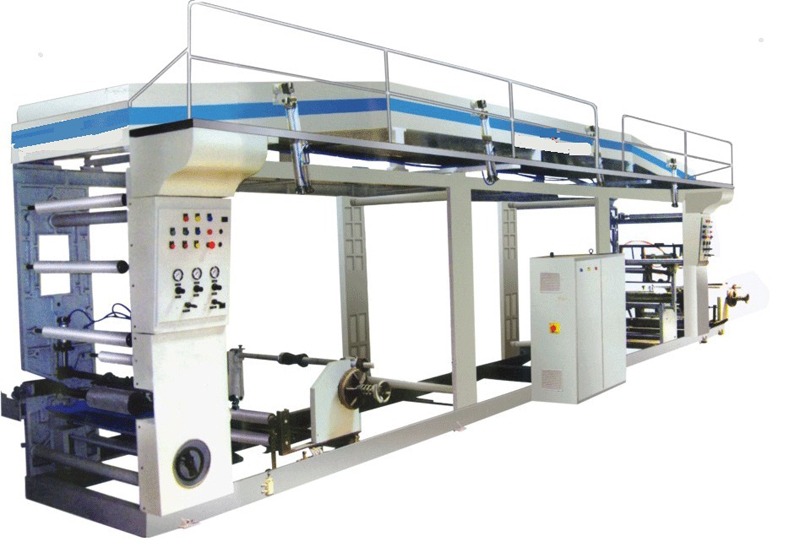
Rewind Station
Hot Air Generator
Coating Unit
Unwind Station
Note :
The actual production speed will however depend on all lamination condition, such as type weight and quality of material adhesives and solvents atmospheric condition operator skillfulness etc.



 1.76 Lakh - 4.75 Lakh/ set
 20 Lakh / Unit
 1.40 Lakh / Piece




Connect with us





 For Buyer
  For Seller
  Help
Help 

 Odhav, Ahmedabad, Gujarat
 Send Enquiry