Product Specifications
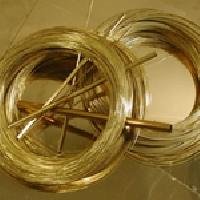
Zinc
Zinc ore usually consists of sulphide minerals, which can not be directly reduced. Instead, the ores must first be calcined to convert the sulphide minerals into an oxide form, which then can be reduced by smelting. Smelting is roughly classified into two methods, the dry method and the wet method. In the dry method the oxide ore is miced with coke and heated to 1200 – 1300 degrees Celsius to generate zinc vopour.
The vapour than passes into a condenser where it cools and condenses. In the wet method, the roasted ore is treated with sulphuric acid and the resulting solution is then electrolyzed.
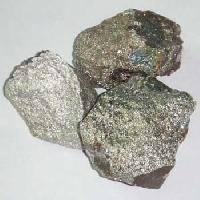
Lead
The process of “roasting,sintering,blast furnace,electrolytic refining” which is known as “blast furnace method” is generally applied for lead smelting. Lead sulphide concentrates (Pb 65 – 70 wt %) are converted into oxide form by roasting. After roasting, the lead oxide together with coke and fluxes such as limestone are reduced in a blast furnace to form crude metallic lead (Pb 97 wt %).
The profile of blast furnace for lead smelting is similar to the copper smelting process.
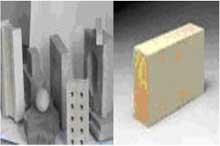
The refractories include high alumina refractories (60-72 % Al2O3), fireclay high grog, mag-chrome & chrome-mag bricks, carbon bricks, acid resistant bricks, insulating refractories and monolithic (both alumino – silicate and basic).
Application ::
The major locations of use are as follows
| Sl. No. | Refractories | Location |
| 1. | High aluimina refractories (60-70% Al2O3) including bricks, ramming masses, castables | Waelz kiln, clinker kiln Cupellation furnaces, retorts settlers, etc. |
| 2. | Fireclay high grog quality bricks | Blast furnace |
| 3. | Fireclay other quality bricks and monolithics | IF Kettles, refineries, Boilers, roaster, etc. |
| 4. | Mag-chrome and chrome-mag | Waelz kiln and clinker kiln. |
| 5. | Insulation refractories | Boilers, Waelz kiln Clinker feed chute, Kettle refining, DL maching, ignition hood, induction furnace, etc. |
| 6. | Carbon bricks and pastes | Scrubbers |
| 7. | Acid resistant bricks | Drying tower, acid mixing tower, absorption tower ( leaching, electrolysis & acid plant.) |

Company Information
 Member Since 17 Years
 Nature of Business Exporter
 Address 1-B, Trikut, 181, Block ‘G ‘New Alipore Kolkata – 700 053, Alipore, Kolkata, West Bengal, 700053, IN
 Number of Employees 501 - 1000
Ask for more detail from the seller
Contact Supplier

Connect with us





 For Buyer
  For Seller
  Help
Help 
 Twitter
 WhatsApp
 Facebook
 Linkedin