
Company Information
 Member Since 9 Years
 Nature of Business Supplier Year of Establishment 1986
Ask for more detail from the seller
Contact Supplier
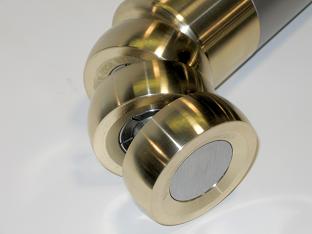
Since the introduction of the modern ball mandrel in the 1950's, aluminum-bronze and hard-chrome plated steel have been the most common material specifications. The former has been preferred for ferrous and titanium tubing while the latter for aluminum, copper-based, and, in some cases, mild steel tubing. Even with the advent of remarkable life-extending thermal diffusion and titanium coatings, there remain good reasons for preferring aluminum-bronze and hard-chromed plated steel for mandrel tooling.
For example, the primary cause of shortened mandrel life is not the material specification but set-up. The purpose of the mandrel is to maintain the original round, square, rectangular, or other shape of the tubing throughout the arc of the bend. This is achieved by setting the mandrel so that its nose supports the point of bend, at which the tubing material becomes plastic as it is drawn into a bend. Too often the mandrel nose is set behind the point of bend so that the weaker balls and links must do the work of the nose, which significantly shortens the life of these components.



Connect with us





 For Buyer
  For Seller
  Help
Help 
 United States
  Send Enquiry