
Company Information
 Member Since 11 Years
 Nature of Business Supplier
Ask for more detail from the seller
Contact Supplier
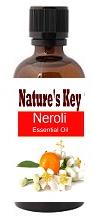
Oil Blend Citrus aurantium
Neroli essential oil is one of the most popular essential oils, as it not only has great therapeutic properties, but also has the most incredible smell. It has a greatly relaxing effect on the body and mind, relieving muscle spasms, calming heart palpitations and has a wonderful rejuvenating and regenerative effect on the skin, helping to prevent ugly scarring and fighting stretch marks.
FOR EXTERNAL USE ONLY!
Origin: Italy
Neroli OilNeroli oil is extracted from the flowers of Citrus aurantium var. amara (also known as Citrus vulgaris and C. Bigardia) of the Rutaceae family and is also known as orange flower and Neroli bigarade.
As with lavender, this essential oil is one of the most popular essential oils, as it not only has great therapeutic properties, but also has the most incredible smell. It has a greatly relaxing effect on the body and mind, relieving muscle spasms, calming heart palpitations and has a wonderful rejuvenating and regenerative effect on the skin, helping to prevent ugly scarring and fighting stretch marks.
Oil propertiesNeroli oil has a sweet, floral and slightly haunting aroma, the color is pale yellow and the viscosity is watery.
Origin of Neroli Oil
It is also known as ‘orange blossom’ and it takes about 1000 lbs. of orange blossoms to make 1 lb. of Neroli oil. The name is said to have originated from the Italian princess, Anne-Marie de la Tremoille (Countess of Nerola) who used the oil as a perfume and to scent her bathwater and gloves. It is still an ingredient for making traditional smelling eau-de-cologne.
Orange petals are often associated with marriage, purity and brides, as brides traditionally wore orange buds in their hair.
Extraction
Neroli oil is extracted from the small, white, waxy flowers of the bitter-orange tree by steam distillation and yields 0.8 – 1 %.
Chemical compositionThe main chemical components of neroli oil are a-pinene, camphene, b-pinene, a-terpinene, nerol, neryl acetate, farnesol, geraniol, linalool, nerolidol, linalyl acetate, methyl anthranilate and indole.
Neroli oil is non-toxic, non-sensitizing, non-irritant and non-phototoxic yet must be used sparingly when a sharp clear head is needed, as it can be very relaxing.
Therapeutic propertiesThe therapeutic properties of Neroli oil are antidepressant, antiseptic, anti-infectious, antispasmodic, aphrodisiac, bactericidal, carminative, cicatrisant, cytophylactic, cordial, deodorant, digestive, emollient, sedative and tonic.
Uses
On the skin, neroli oil can help to regenerate skin cells and is a rejuvenating oil useful to prevent ugly scar tissue, promote a smoother skin, fighting stretch marks and broken capillaries.
Neroli oil not only smells exquisite, but can also relax and calm the nervous system, the digestive tract and is helpful in skin care.



Connect with us





 For Buyer
  For Seller
  Help
Help 
 United Arab Emirates
  Send Enquiry