 400 - 44,109 / Piece
Company Information
 Member Since 11 Years
 Nature of Business Retailer
 GST No. 27**********ZC
Ask for more detail from the seller
Contact Supplier
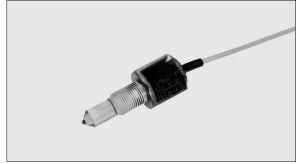
Optical Level Sensors are precision devices used to detect the level of liquids, solids, or powders in containers, tanks, and silos without contact. They utilize the principle of light reflection or refraction to determine the presence or absence of material at a specific point, making them ideal for reliable level detection in industrial processes. Principle of Operation Optical level sensors operate based on changes in light transmission caused by the presence or absence of a medium at the sensor tip. Typically, they use infrared light emitted from an LED directed at a prism or lens: When the sensor tip is surrounded by air (no material), most of the light is internally reflected back to the phototransistor. When the sensor tip is immersed in liquid or covered by solids, the light is refracted away, reducing the reflected light received. The sensor’s electronics detect this change in reflected light intensity and switch an output accordingly, signaling material presence or absence. Components Light Emitter: Usually an IR LED that sends light to the sensing surface. Photodetector: A phototransistor or photodiode that detects reflected light. Sensing Tip: Usually made of durable, chemically resistant materials like glass or sapphire. Electronics: Signal processing circuitry to interpret light intensity changes. Housing: Compact, rugged casing designed for mounting on tanks or pipes. Output Interface: Digital output (ON/OFF) or analog output in some advanced models. Features and Advantages Non-contact or Point Detection: Provides accurate, localized level detection without mechanical moving parts. Chemical Resistance: Sensor tips often made from corrosion-resistant materials, suitable for aggressive chemicals. No Calibration Needed: Most optical sensors are factory calibrated. Compact Size: Small form factor ideal for limited space. Insensitive to Foam and Bubbles: Optical sensors are less affected by foam compared to ultrasonic sensors. Low Power Consumption: Efficient light emission and detection. High Reliability and Long Life: Minimal wear and tear due to lack of moving parts. Industrial Applications Liquid Level Detection: Detect presence or absence of liquids in tanks, pipes, or vessels for pump control, overflow prevention, or batch processing. Solid Material Monitoring: Detect granular or powder levels in hoppers and silos. Chemical Processing: Used in corrosive environments due to resistant sensor tip materials. Food & Beverage Industry: Hygiene-friendly sensors for detecting liquids or solids without contamination risk. Wastewater Treatment: Level monitoring of sludge, water, or chemicals. Installation and Usage Mount the sensor at the desired detection point on the tank or pipe. The sensor tip must be clean and free from deposits for accurate detection. Use mounting accessories like brackets or compression fittings for secure installation. Avoid direct exposure to ambient light sources or reflective surfaces that may cause false signals. For continuous level monitoring, combine multiple sensors or use analog output models. Example Use Case In a chemical manufacturing plant, an optical level sensor is installed on a storage tank to detect the minimum liquid level. When the liquid falls below the sensor tip, the sensor triggers a signal to the control system to start refilling, preventing pump damage and ensuring uninterrupted production. Limitations Point detection only; does not provide continuous level measurement (unless multiple sensors are used). Sensor tip fouling or deposits can cause false readings, requiring periodic cleaning. Not suitable for extremely opaque or highly viscous materials without special calibration. Conclusion Optical level sensors offer reliable, maintenance-free level detection with high chemical resistance and compact design, ideal for point-level sensing in various industrial applications.



Connect with us





 For Buyer
  For Seller
  Help
Help 

 Chembur, Mumbai, Maharashtra
 Send Enquiry