
Company Information
 Member Since 11 Years
 Nature of Business Supplier
Ask for more detail from the seller
Contact Supplier
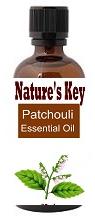
Patchouli essential oil may remind people of the hippie era, its value in skincare is incalculable. It is also great for fighting depression and anxiety. It has great diuretic properties and also helps break down cellulite, while stimulating the regeneration of skin cells, speeding up healing and preventing ugly scars forming when wounds heal.
FOR EXTERNAL USE ONLY!
Origin: India
Patchouli OilPatchouli oil is extracted from Pogostemon cablin (also known as Pogostemon patchouli) of the Labiatae family and is also known as patchouly and puchaput.
Although this essential oil may remind people of the hippie era, its value in skincare is incalculable. It is also great for fighting depression and anxiety. It has great diuretic properties and also helps break down cellulite, while stimulating the regeneration of skin cells, speeding up healing and preventing ugly scars forming when wounds heal.
Oil propertiesPatchouli oil has a rich musky-sweet, strong spicy and herbaceous smell. It is light yellow to dark brown in color and is a thick oil.
Origin of Patchouli Oil
It is a perennial, bushy plant that grows up to 1meter (3 feet) high, with a sturdy, hairy stem and large, fragrant, furry leaves, about four inches long and five inches across. It has whitish flowers tinged with purple.
The plant is native to Malaysia and India, where it is known as ‘puchaput’. The word is derived from Hindustan word ‘patch’ meaning ‘green’ and ‘ilai’ meaning ‘leaf.’
It was placed between Indian cashmere shawls en route to Victorian England, to protect the merchandise from moths, and without this signature smell of dried patchouli leaves the shawls could not be sold in England.
In the East, it is used in potpourris and sachets and place between linen, to keep bedbugs away, and it is the smell of patchouli oil, mixed with that of camphor, that gives Indian ink its characteristic smell.
Extraction
Patchouli oil is extracted from the young leaves which are dried and fermented prior to steam distillation and yields 2 – 3 %. This oil improves with age to have a fuller, more well rounded odor.
Chemical compositionThe chemical components of patchouli oil are b-patchoulene, a-guaiene, caryophyllene, a-patchoulene, seychellene, a-bulnesene, norpatchoulenol, patchouli alcohol and pogostol.
PrecautionsIt is non-toxic, non-irritant and non-sensitizing, but the smell of patchouli oil may be a little persistent for some people and large doses may cause loss of appetite in some individuals.
Therapeutic propertiesThe therapeutic properties of patchouli oil are antidepressant, antiphlogistic, antiseptic, aphrodisiac, astringent, cicatrisant, cytophylactic, deodorant, diuretic, febrifuge, fungicide, insecticide, sedative and tonic.
Uses
On the skin, this oil is one of the most active and is a superb tissue regenerator, which helps to stimulate the growth of new skin cells. In wound healing, it not only promotes faster healing, but also helps to prevent ugly scarring when the wound heals.
Patchouli oil is very effective in sorting out rough, cracked and overly dehydrated skin and is used to treat acne, acne, eczema, sores, ulcers, any fungal infections, as well as scalp disorders.
Patchouli oil has a beneficial effect on the skin, helps for infections and insect bites, water retention and can help with stress related problems and addictions.



Connect with us





 For Buyer
  For Seller
  Help
Help 
 United Arab Emirates
  Send Enquiry