
Company Information
 Member Since 7 Years
 Nature of Business Retailer
 GST No. 08AFQPP4722H1Z3
Ask for more detail from the seller
Contact Supplier
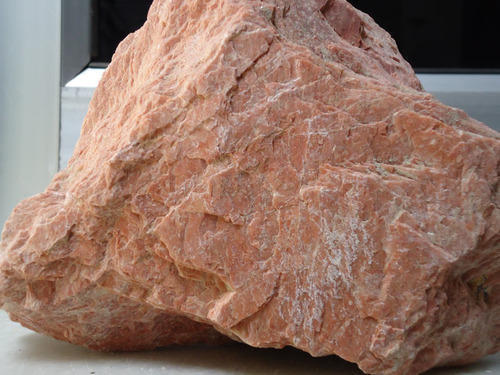
The name of “Feldspar” refers to group of Aluminum Silicate of potassium, sodium and calcium. The chief use of Feldspar is in the Ceramic and Glass Industries. Smaller quantities are used in the manufacturing of Tiles, Whiteware, and Sanitaryware. Other uses of Feldspar include Catalysts, Acid resistant and Decorative Stone as a flux or binding agent in certain scanning Soaps and artificial teeth
Above are based on our research as well as research of others. However, this document is not contractual and nothing in it constitutes a warranty (expressed or implied) that the goods described are accurate and fit for a particular purpose of the customer. Purchasers are advised to make their own test to determine the suitability.
Potash feldspar is used in various industries.
Silent Features
Applications
In the manufacturing of ceramic products, Feldspar is the second most important ingredient after clay. Feldspar does not have a strict melting point, since it melts gradually over a range of temperatures. This greatly facilitates the melting of quartz and clays and, through appropriate mixing, allows modulations of this important step of ceramic making. Feldspars are used as fluxing agents to form a glassy phase at low temperatures and as a source of alkalies and alumina in glazes. They improve the strength, toughness, and durability of the ceramic body, and cement the crystalline phase of other ingredients, softening, melting and wetting other batch constituents.
Feldspar assists the enamel composition, assuring the absence of defects and the neatness of the end product: e.g. enamel frits, ceramic glazes, ceramic tile glazes, sanitary-ware, tableware, electrical porcelain and giftware.
| - | POTASH-01 | POTASH-02 | - |
|---|---|---|---|
| Silica | SiO2 | 66% (+/- 1%) | 68% (+/- 1%) |
| Alumina | Al2O3 | 18% (+/- 0.5%) | 17% (+/- 0.5%) |
| Potassium Oxide | K2O | 12.8% (+/- 1%) | 10% (+/- 1%) |
| Sodium Oxide | Na2O | 2% (+/- 1%) | 3% (+/- 1%) |
| Titanium Oxide | TiO2 | Nil | Nil |
| Calcium Oxide | CaO | Nil | Nil |
| Magnesium Oxide | MgO | Nil | Nil |
| Ferric Oxide | Fe2O3 | 0.06% (+/- 0.01%) | 0.08% (+/- 0.02%) |
| Loss on Ignition | LOI | 0.001 | 0.002 |



Connect with us





 For Buyer
  For Seller
  Help
Help 

 Gokuldham, Bhilwara, Rajasthan

 Send Enquiry