
Company Information
 Member Since 8 Years
 Nature of Business Supplier Year of Establishment 2004
Ask for more detail from the seller
Contact Supplier
What is
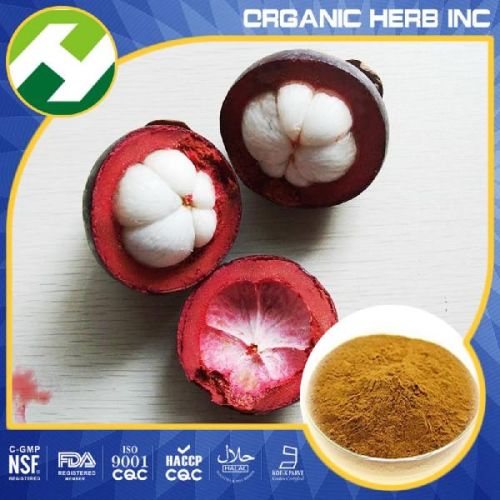
The purple mangosteen (Garcinia mangostana), colloquially known simply as mangosteen, is a tropical evergreen tree believed to have originated in the Sunda Islands and the Moluccas of Indonesia. It grows mainly in Southeast Asia, southwest India and other tropical areas such as Puerto Rico and Florida, where the tree has been introduced. The tree grows from 6 to 25 m (19.7 to 82.0 ft) tall. The fruit of the mangosteen is sweet and tangy, juicy, somewhat fibrous, with fluid-filled vesicles (like the flesh of citrus fruits), with an inedible, deep reddish-purple colored rind (exocarp) when ripe. In each fruit, the fragrant edible flesh that surrounds each seed is botanically endocarp, i.e., the inner layer of the ovary. Seeds are almond-shaped and sized.
The purple mangosteen belongs to the same genus as the other, less widely known, mangosteens, such as the button mangosteen (G. prainiana) or the charichuelo
Function
1. Antioxidant: Mangostin is the inhibitor of oxidation of LDL, which have major role in
cardio-vascular and related chronic diseases.
2. Anti-allergies and inflammations: mangostin was identified to inhibit COX, as their
inhibition acutely reduces inflammations, pains and fevers.
3. Antivirus and anti-bacteria: the polysaccharides in the extract form can stimulate phagocytic
cells to kill intracellular bacteria.
4. Anticancer: Mangostin has been revealed to inhibit topoisomerase, which is essential for cell
division in cancer cells, also could selectively induce cell apoptosis and inhibit cell division



Connect with us





 For Buyer
  For Seller
  Help
Help 
 Changsha, Arunachal pradesh
 Send Enquiry