
Company Information
 Member Since 9 Years
 Nature of Business Supplier Year of Establishment 2013
Ask for more detail from the seller
Contact Supplier
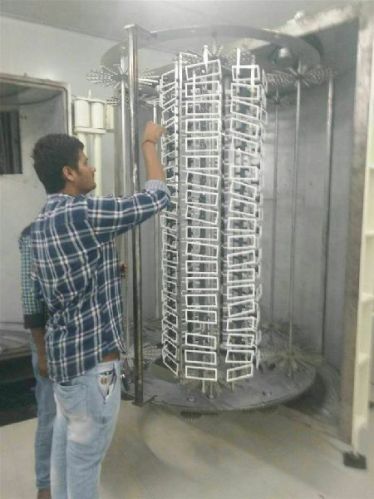
The equipment adopts the resistance heating in the vacuum chamber, to melt and vaporize the metal wire (aluminum wire) cling to the resistance wire. The vaporized metal molecule deposit on the substrates, to gain the smooth film as well as high reflectivity. Thus the surface of the items can be decorated and beautified.Thermal Resistance Evaporation Coating Technology: Thermal vacuum deposition is one method for fabricating thin films under a high vacuum environment also addressed as "thermal evaporation method". With this method, an electron beam (e-beam) or resistive heating is usually used to evaporate the desired material inside the vacuum coating chamber, which then adheres to a substrate placed above it. This method can classified as a form of PVD, which stands for physical vapor deposition, and is suitable for fabricating high-quality thin films with thicknesses on the order of nanometers on glass, plastic, films, metals, and almost any other kind of material. Applied industry: Widely used in automotive, audio and varinous small appliances, computers, clocks and watches, toys cell phones reflective Cup, cosmetics toys tableware sanitary shoe heel, ABS, PS, PP, PC, PVC, PET, nylon,metal, Boli, glass, ceramics, TPU, etc. Electroplating effects: general electroplating-face, dumb-(semi-mute, all dumb), the electroplating process wrinkles, wiredrawing,raindrop ect. Coating color: gold, silver, red, blue, green, purple,rainbow color ect.



Connect with us





 For Buyer
  For Seller
  Help
Help 
 Shenzhen
 Send Enquiry