
Company Information
 Member Since 15 Years
 Nature of Business Retailer
 GST No. 07AAACP0442L1ZK
Ask for more detail from the seller
Contact Supplier
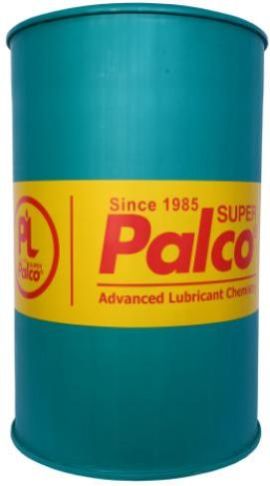
We are offering quenching oils. Quenching is the process by which the desired mechanical properties and hardness of a metal is achieved by controlled cooling from an elevated temperature using a quench fluid. Quenching is usually used with metals that are alloyed with small amounts of other metals. At high temperature the alloying metals are dissolved in the base metal. If the material is cooled slowly, the alloy elements have time to precipitate out separately. If the metal is quenched, the alloying metals are trapped within the crystal grains, making them harder. Optimal quench uniformity is essential if the potential for cracking, distortion, residual stress and spotty hardness is to be minimized. This means that heat transfer must be as uniform as possible throughout the quenching process. Further optimal uniformity of quenchant flow around all surfaces is necessary. One of the most important factors affecting quench uniformity is the design of the quench system. Agitation is one of the most critical areas of system design. Propeller agitation of the quench oil is necessary if uniform heat transfer throughout the quenching operation, producing less cracking and distortion has to be achieved.



Connect with us





 For Buyer
  For Seller
  Help
Help 

 Rohini, Delhi
 Send Enquiry