
Products / Services
  • Products / Services
  • Companies
  • Buy Leads
    Post Buy Requirement
    • Carbohydrates3.40 g
    • Energy20 kcal/70 kJ
    • Sugars1.86 g
    • Supply TypeManufacturer, Exporter, Supplier, Retailer
    • Preferred Buyer Location All over the world

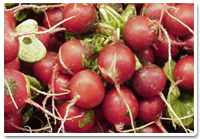
    What is Radish? Botanically termed as raphanus sativus, the radish is a herbaceous plant grown for their crisp and peppery-tasting roots. This plant of the mustard family with a pungent root was....
    View More Details
    Send Enquiry

    Company Information

    • calendar Member Since 14 Years
    • building Nature of Business Retailer

    Ask for more detail from the seller

    Contact Supplier
    Report incorrect details

    Product Details no_img_icon

    What is Radish?
    Botanically termed as raphanus sativus, the radish is a herbaceous plant grown for their crisp and peppery-tasting roots. This plant of the mustard family with a pungent root was domesticated in Europe in pre-Roman times. Some of the roots are long and tapering, others are globular; the latter are commonly known as turnip radishes. A native to China, this vegetable is grown and consumed in every corner of the globe.


    Radishes are available in various varieties, with white, red, or black roots of different shapes and sizes. Being a fast growing plant, they can be ready for harvest in less than a month. The best quality


    roots are produced in spring or fall when temperatures are in the range of 50 to 65°F, with ample moisture. Certain species of radishes are grown for their seeds; oilseed radishes are grown, as the name implies, for oil production. In China, they are generally pickled in brine; whereas radishes are considered as a staple food in Japan.


    Varieties
    Generally, radishes can be classified into four main types viz. summer, fall, winter, and spring. They differ considerably in their colours, shapes and types, such as black or multi-coloured radishes, with round or elongated roots that can grow longer than a parsnip. They are similar to beets as far as their colour is concerned, but radishes are usually smaller, smoother, and brighter in color.


    Plant Description
    A cold climate crop, radish is an annual or biennial plant of Chinese origin belonging to the plant order capparales. This plant of the mustard family is grown for its thickened root, which is eaten

    uncooked as a salad vegetable. Many cultivars are available in variety of colours like red, yellow, white, black, pink, and red-white combinations.

    Its leaves are simple and deeply lobed, often down to the midrib. Well drained sandy loams with pH 6.5 – 7.0. are most suitable for cultivating radishes. The best quality roots are produced in spring or fall when temperatures are in the range of 50 to 65°F.


     
    Nutritional Value
    A powerhouse of potassium, folic acid, and ascorbic acid, radishes are described as a wholesome diet by many leading nutritionists. These root crops contain higher concentrations of magnesium, copper, calcium, riboflavin, Vitamin B6, etc. A cup of sliced red radish bulbs provide approx. 20 calories or less.
     
    Uses:
    • Culinary Uses: Though all parts of the radish plant are edible, its napiform taproot is the most popular part for eating. It is eaten in raw as well as in cooked form and is suitable in a dizzying array of dishes from salads to stir fries. The bulb of the radish is usually eaten raw, but tougher specimens can be steamed. It is an inseparable element of salad and is known for its pungent and peppery flavor.
    • Medicinal Uses: A rich source of nutrients, minerals and vitamins, radishes possess innumerable healing and medicinal properties. Herbologists prefer radishes in variety of ailments including whooping cough, cancer, coughs, gastric discomfort, liver problems, constipation, dyspepsia, gallbladder problems, arthritis, gallstones, kidney stones and intestinal parasites.
    • Industrial Uses: The seeds of the Raphanus sativus species can be pressed to extract seed oil. Wild radish seeds contain up to 48% oil content, and while not suitable for human consumption the oil has promise as a source of biofuel.


    Share your requirements for a quick response!
    Tell us what you need?

    Looking for Radish?

    Quantity
    Seller Contact Details
    To list your productBoost Your Business Visibility WorldwideRegister Now
    To list your productBoost Your Business Visibility WorldwideRegister Now
    Waiting for permission
    To search by voice, go to your browser settings and allow access to microphone

    Allow microphone access to search with voice