
Company Information
 Member Since 13 Years
 Nature of Business Supplier
Ask for more detail from the seller
Contact Supplier
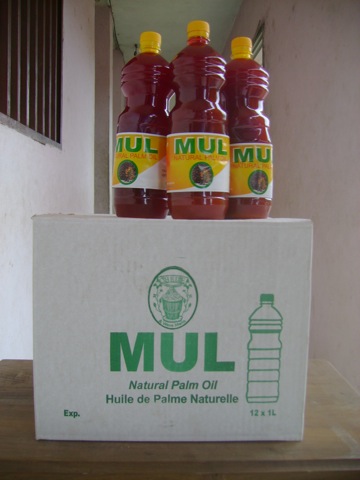
Red palm oil
Red palm oil gets its name from its characteristic dark red color, which comes from carotenes, such as alpha-carotene, beta-carotene and lycopene, the same nutrients that give tomatoes, carrots and other fruits and vegetables their rich colors.
Red palm oil contains at least 10 other carotenes, along with tocopherols and tocotrienols (members of the vitamin E family), CoQ10, phytosterols, and glycolipids. In a 2007 animal study, South African scientists found consumption of red palm oil significantly decreased p38-MAPK phosphorylation in rat hearts subjected to a high-cholesterol diet.
Since the mid-1990s, red palm oil has been cold-pressed and bottled for use as cooking oil, and blended into mayonnaise and salad oil. Red palm oil antioxidants like tocotrienols and carotenes are added to foods and cosmetics due to their purported health benefits.
In a 2004 joint study between the Kuwait Institute for Scientific Research and the Malaysian Palm Oil Board, the scientists found cookies, being higher in fat content than bread, are a better vehicle for red palm oil phytonutrients.
In a 2009 study, scientists in Spain tested the acrolein emission rates from the deep-frying of potatoes in red palm, olive and polyunsaturated oils. They found higher acrolein emission rates from the polyunsaturated oils. The scientists characterized red palm oil as "mono-unsaturated".
Frying French fries in red palm oil gives them an attractive color.



Connect with us





 For Buyer
  For Seller
  Help
Help 
 Douala, Littoral
  Send Enquiry