
Company Information
 Member Since 12 Years
 Nature of Business Supplier
Ask for more detail from the seller
Contact Supplier
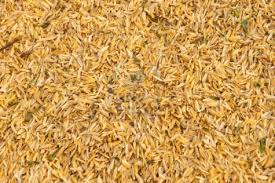
We are offering rice husk for pigs and chicken. Rice husk is difficult to igninte and it does not burn easily with open flame unless air is blown through the husk. It is highly resistant to moisture penetration and fungal decomposition. Husk therefore makes a good insulation material.
rice husk has a high silica (sio2) contents which means that it decomposes slowly when brought back to the field. It also makes it a poor foder
handling of rice husk is difficult because it is bulky and dusty. It has angle of repose is about 40-45° which means that it's flow ability, e.g. In feed hoppers is very poor.
rice husk has low bulk density of only 70-110 kgm³, 145 kgm³ when vibrated or 180kgm³ in form of brickets or pellets. It thus requires large volumes for storage and transport, which makes transport over long distances un-economical.
when burned the ash content is 17-26%, a lot higher than fuels (wood 0.2-2%, coal 12.2%). This means when used for energy generation large amounts of ash need to be handled.
rice husk has a high average calorific value of an 3410 kcalkg and therefore is a good, renewable energy source.
because of the high silica contents rice husk is very abrasive and wears conveying elements very quickly.
rice husk is not an easy fuel. One concern in rice husk firing is the behavior of the ash, i.e., its slagging and fouling tendency caused by a low melting point of the rice husk ash.



Connect with us





 For Buyer
  For Seller
  Help
Help 
 Malaysia
  Send Enquiry