



Company Information
 Member Since 9 Years
 Nature of Business Retailer
 GST No. 36GNLPS1299P1ZS
Ask for more detail from the seller
Contact Supplier
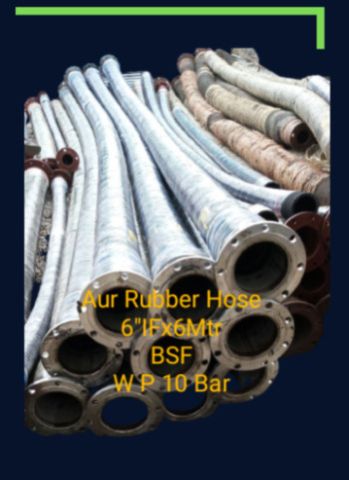
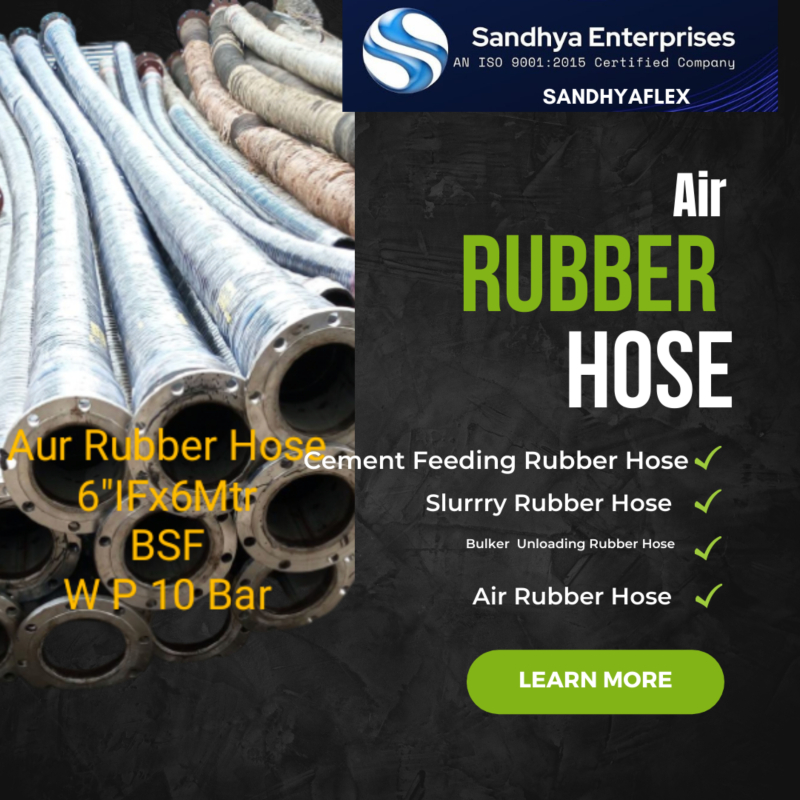
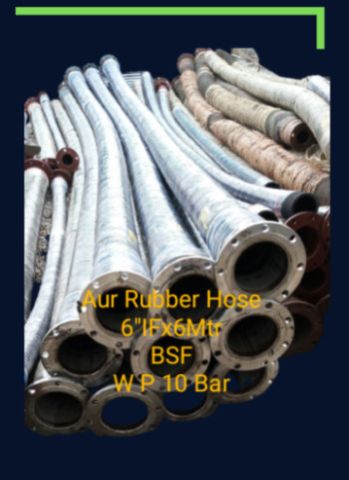
Application of Cement Hose: Cement Feeding Rubber Hose is used for spraying cement grout at irrigation projects, buildings, dams, sites, dams, bridges and roads in the hilly terrains. Construction: Lining: It is a uniform, seamless and extra thick tube of natural, synthetic and blend rubber compound. It offers excellent abrasion resistance which is free from air blisters, porosity and other defects. Reinforcement: Woven textiles or braided high strength natural/ synthetic yarns that are impregnated by piles of rubber Cover: It is a suitable rubber compound having a cloth marked finish making it weather and abrasion resistant. Electrical Bonding: To provide electrical continuity throughout the length of the hose, a stand of copper wire is embedded in the reinforcement plies. As per IS: IS: 13071-1991 Specification Construction Core: Black colour, Synthetic and natural rubber blend resistant to abrasion Reinforcement: High Tensile Synthetic Textile cord A flexible rubber hose is a type of hose made from rubber or a blend of rubber materials that offers flexibility and durability. It is designed to transport various substances, including liquids, gases, and solids, from one location to another. The flexibility of the rubber material allows the hose to bend, twist, and maneuver easily, making it suitable for a wide range of applications. Here are some key features and details related to flexible rubber hoses: 1. Material: Flexible rubber hoses are typically constructed using high-quality synthetic rubber compounds or natural rubber. These materials provide excellent flexibility, resistance to abrasion, weathering, chemicals, and temperature variations. 2. Structure: Flexible rubber hoses usually consist of multiple layers, including an inner tube, reinforcement layers, and an outer cover. The inner tube comes into direct contact with the transported substance and is designed to resist the specific material being conveyed. Reinforcement layers, such as braids or spirals, enhance the hose's strength and pressure resistance. The outer cover protects the hose from external damage and environmental factors. 3. Flexibility: The rubber material used in these hoses allows them to be highly flexible, making them suitable for applications that require bending or maneuvering around obstacles. This flexibility enables easy installation and reduces the risk of kinking or tangling. 4. Sizes and Diameters: Flexible rubber hoses are available in various sizes and diameters to accommodate different applications and flow rates. Common sizes range from small diameters, such as 1/4 inch, to larger ones exceeding several inches. 5. End Connections: Flexible rubber hoses often feature specific end connections that allow them to connect to equipment, pipes, or fittings. These connections can include threaded ends, barbed fittings, cam-lock couplings, flanges, or other custom fittings depending on the intended use and industry requirements. 6. Applications: Flexible rubber hoses have extensive applications across various industries, including automotive, industrial, construction, agriculture, plumbing, and more. They are commonly used for conveying liquids like water, chemicals, oil, fuels, and gases, as well as for transporting solids such as grains or granular materials. 7. Standards and Certifications: Depending on their specific application and industry, flexible rubber hoses may need to comply with certain standards and certifications. These standards can address factors like pressure ratings, temperature limits, chemical compatibility, electrical conductivity, or food-grade requirements. When purchasing a flexible rubber hose, it's important to consider factors such as the intended application, the specific substance being conveyed, pressure and temperature requirements, compatibility with fittings or equipment, and any necessary certifications or standards. Consulting with a trusted supplier or manufacturer can help ensure you s



Connect with us





 For Buyer
  For Seller
  Help
Help 

 Gajularamaram, Hyderabad, Telangana


 Send Enquiry