
Company Information
 Member Since 19 Years
 Nature of Business Supplier
Ask for more detail from the seller
Contact Supplier
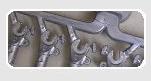
Aside from using trim dies, the usual method of degating is to tumble in an open mouth oblique barrel then screen separate the parts. Working with small pieces in very large barrel tumblers means a densely packed load that is too heavy to move easily and has poor flow properties. Too much time is spent moving and screening the parts. One solution is to alter a standard horizontal enclosed barrel tumbler by adding an extra large door opening. The load is then tumble-degated. This process also removes flash and polishes. The solid door can then be removed and replaced by a screen door. As the barrel rotates, the parts fall out, leaving all the gates in the barrel. The parts are degated, deflashed and separated at one station, completely eliminating moving the parts.
This type of unit can also solve another problem that often plagues die-casters when working with small parts. The sprue and runner must be kept on the screen as the parts go through and the sprue often covers or fills in the holes. Since the sprue is heavy, it usually cannot be bounced out of the holes again. The rotating barrel eliminates this problem because it empties the hole every time it revolves.
Use an Oblique Tilting Tumbler
This principle can also be applied to the oblique (tilt) tumbler. Locks can be added to the mouth of the barrel to clamp on a screen door. The barrel is loaded then the screen door is put in place. The barrel is run at a 45º upward tilt until the pieces are broken off and smoothed out. The barrel is then tilted down 45º, bringing the load forward to the screen. This is a good solution if you already have tilt tumblers, but if a choice can be made, the horizontal barrels will prove faster and more thorough. It should be noted that if a machine has bronze bearings instead of roller bearings, the bronze bearings would need copious lubrication to handle the extra load. Slotted screens or parallel bars have proven successful in allowing thin parts such as loops or zipper pulls to fit through while holding back the thicker gate.



Connect with us





 For Buyer
  For Seller
  Help
Help 
 United States
  Send Enquiry