
Company Information
 Member Since 8 Years
 Nature of Business Retailer
Ask for more detail from the seller
Contact Supplier
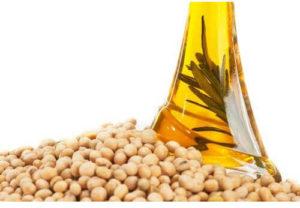
When seeking to answer the question, “What is soy lecithin?” our search immediately takes us to mid-19th century France. First isolated by French chemist Theodore Gobley in 1846, lecithin is a generic term to designate a variety of naturally occurring fatty compounds found in animal and plant tissues.
Composed of choline, fatty acids, glycerol, glycolipids, phospholipids, phosphoric acid and triglycerides lecithin was originally isolated from egg yolk.
Today, it is regularly extracted from cottonseed, marine sources, milk, rapeseed, soybeans, and sunflower. It is usually used as a liquid but also can be purchased as granules.
By and large, the vast majority of lecithin use centers around its unique ability of being an excellent emulsifier. We all know that oil and water don’t mix, right?
When the two are placed into a solution and shaken together, the oil droplets initially spread out and appear to evenly disperse. Once the shaking stops, the oil separates from the water again. This is why lecithin is so important.
When lecithin enters the equation, oil is broken down in smaller particles in a process called emulsification making the oil droplets easier to clean or digest if eaten.
This is one of the reasons why soy lecithin is used as an additive in processed foods, medicines and supplements; it helps give these products a smooth, uniform appearance. Additionally, its ability to emulsify fats makes it an ideal ingredient for nonstick cooking sprays and soaps.



Connect with us





 For Buyer
  For Seller
  Help
Help 
 Kalavad Road, Rajkot, Gujarat
  Send Enquiry