
Company Information
 Member Since 18 Years
 Nature of Business Supplier
Ask for more detail from the seller
Contact Supplier
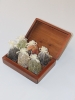
Antique designed wooden box comes with beautiful peppertree shaped brass inlay work in it.
Attractive packing makes it a wonderful gift for your dear ones on special events and occasions.
Contains 6 varities of Indian spices which includes:-
Malabar Black pepper - Black Pepper is the small, dark, unripe fruit of the pepper plant widely used as a spice as well as medicine.
White pepper grains - White pepper is a condiment prepared from the husked dried berries of the pepper plant.
Green pepper - Green peppercorns are true peppercorns of the Piper nigrium flowering vine plant.
Cardamom - Cardamom is the aromatic seeds of a plant of the ginger family, commonly known as "Queen of Spices".
Cloves - Clove is the dried flower bud of a tropical tree, used as an aromatic spice.
Nutmeg and Mace - Nutmeg is the hard brown seed from the nutmeg tree produces a warm, spicy sweet flavor. Mace is the dried lacy membrane from around the nutmeg seed.
Indian spices include a variety of spices grown across the Indian subcontinent (a sub-region of South Asia). With different
climates in different parts of the country, India produces a variety of spices, many of which are native to the
Subcontinent. Peppercorns are often categorized by their place of origin. Two types come from India's Malabar Coast:
Malabar and Tellicherry. Tellicherry comes from grafted Malabar plants grown on Mount Tellicherry.
How long do spices last?
The good news about spices is that they virtually last forever. It’s rare, if not impossible, for a spice to go “bad.” The
biggest threat of time is that it causes spices to lose potency and flavor. The shelf life of spices depends on how the
spices are stored. Spices alter the taste of foods and in different combination of recipes can be altered to brand new
dishes.
How to tell if a spice is bad, rotten or spoiled?
The main factor effecting the shelf life of spices is moisture. If moisture has entered the container, the spice will
become sticky or clump together and not be too good to use. For this reason, it is not good to shake your spice bottle over
your pot of steaming dish – instead pour it into a cup or use a dry spoon to retrieve your spice from the jar. If spices
seemed to be infected or spoiled, you can wash it and sundry it for furthur use. Better to keep it in an airtight glass
containers in a cool dry place to avoid bacterial infection.
Test to see if your spices have gone bad, by rubbing a bit of spice into the palm of your hand. Take a sniff – nice spices
have a nice aroma, so if you don’t smell anything you won’t get much flavor from using the spice. If you have run out of
the spice you need in a recipe, check our substitution page.
How to store spices to extend their shelf life?
The best way to store spices is in their original container or a similar airtight glass container in the pantry. For the
shelf life of spices it makes little difference whether spices are opened or unopened, what is important is that they are
tightly re-sealed immediately after each use.
Freezing is not recommended for spices. But spices that belong in the red pepper family (including paprika) will enjoy an
extended shelf life (remain fresher and retain their red color longer) if stored in the refrigerator. Proper food storage
is the key to extending the expiration date of food.



Connect with us





 For Buyer
  For Seller
  Help
Help 
 United Arab Emirates
  Send Enquiry