
Company Information
 Member Since 2 Years
 Nature of Business Trader Year of Establishment 2005
Ask for more detail from the seller
Contact Supplier
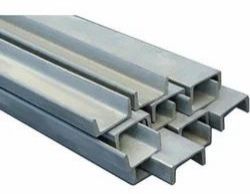
A structural steel beam is a horizontal structural member used to support a structure in resisting vertical loads. How to support frames for buildings and other construction distribute load and stabilise the built structure depends heavily on beams. A beam is a constituent basic, particularly in the framing systems.
The mechanical properties of a structural steel beam represent other elemental characteristics, showing its capacity for holding strength, loads, and stresses put on it in different applications found in construction. In sum, these together comprise integral assurance that the building will be structurally sound and safe.
Tensile Strength: On the other hand, tensile strength is the amount of stress a material can resist in cases where there is stretching or pulling. It has to be so high to enable an engineered design of structural steel beams in resistance to the force that is exerted on them by the loads that they carry.
Yield Strength: Yield strength can be said to be the maximum stress that can be under a material without it retaining deformation permanently. This means there is a point beyond which material changes from an elastic response to a plastic one. It helps prevent the deformation of the structure under normal loads.
The chemical property Of relation to the structural beams of steel refers to the composition of the steel that makes it characteristic and defines behaviour. Key among chemical properties about structural steel beams includ.
Carbon (C):
High carbon contents affect greatly the strength and hardening of the steel. The control of carbon content for the steel for structural steel beams is limited such that the steel maintains a balance between strength and ductility. In case of high carbon content, the steel is always stronger and harder, in this situation the weldability may be compromised.
| Yield Strength | Tensile Strength | Elongation | Hardness | Temperature Resistance |
|---|---|---|---|---|
| 1400 MPa | 1550-1850 MPa | around 10-15% | 450 to 500 HBW | wide range of temperature |



Connect with us





 For Buyer
  For Seller
  Help
Help 

 Dlf Industrial Area, Faridabad, Haryana
 Send Enquiry