
Company Information
 Member Since 10 Years
 Nature of Business Exporter
 GST No. 05BFDPD7978H1Z9
Ask for more detail from the seller
Contact Supplier
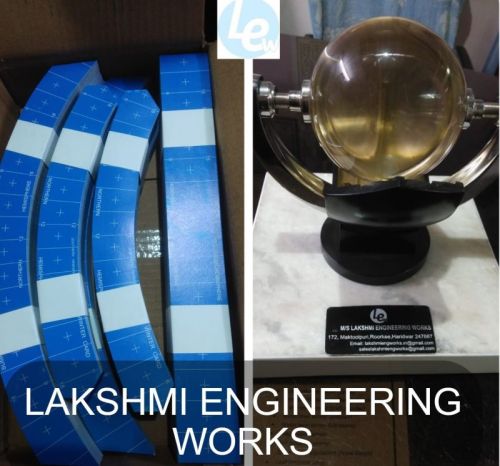
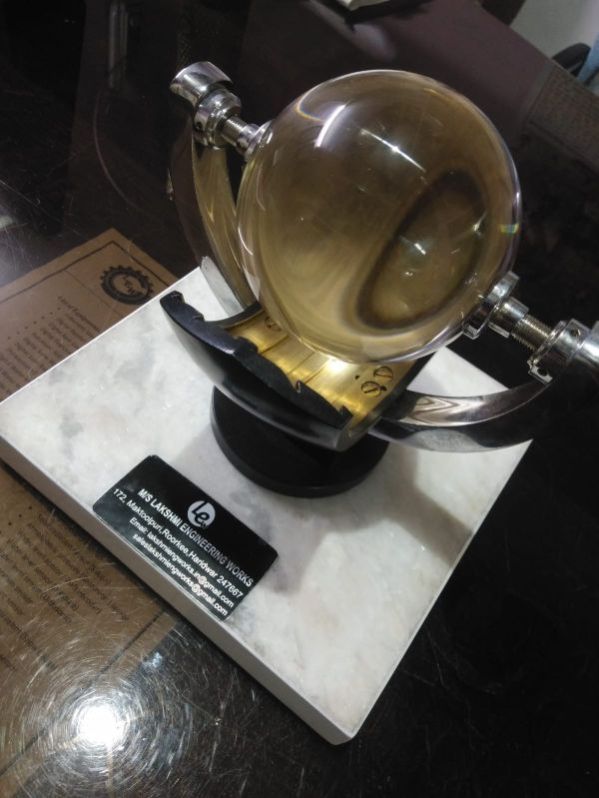
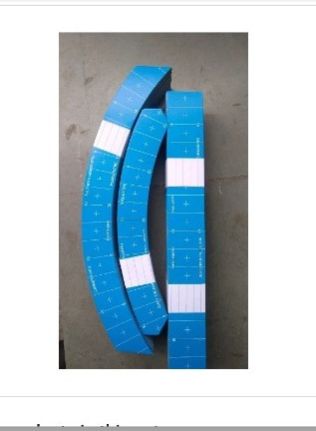
Sunshine recorders automatically registering time and duration of insulation are used at meteorological and climatologically research centers, observatories, spas and health resorts, in agriculture, horticulture, viticulture and vegetable gardening. The instruments are set up on flat roofs or on clear ground in such manner as to be well exposed to solar radiation, during the whole day. The type of instrument to be chosen depends on the latitude of the place installation. This recorder consists essentially of a glass sphere mounted concentrically in a section of a spherical metal bowl, the diameter of which is such that the sun stays are focused sharply on a card held in the grooves, in the bowl. Three overlapping pairs of grooves are provided in the bowl to taken up cards suitable for the different seasons of the year. A sunshine recorder is a device that records the amount of sunshine at a given location or region at any time. The results provide information about the weather and climate as well as the temperature of a geographical area. This information is useful in meteorology, science, agriculture, tourism, and other fields. It has also been called a heliograph. There are two basic types of sunshine recorders. One type uses the Sun itself as a time-scale for the sunshine readings. The other type uses some form of clock for the time scale. Older recorders required a human observer to interpret the results; recorded results might differ among observers. Modern sunshine recorders use electronics and computers for precise data that do not depend on a human interpreter. Newer recorders can also measure the global and diffuse radiation. This recorder consists essentially of a glass sphere of 96 mm diameter mounted concentrially in a section of a spherical metal bowl, the diameter of which is such that the sun`s tays are focussed sharply on a card held in the grooves, in the bowl. Three overlapping pairs of grooves are provided in the bowl to taken up cards suitable for the different seasons of the year. The sphere is made of uniform and well annealed colourless glass and is carefully ground and polished with great precision. Installation Following manipulations are necessary when installing the recorder: a) The base should be levelled. b) The bowl should be so adjusted that the centre line of the equinoctial card lies in the celestial equator (the scale line of latitude marked on the bowl facilitates this). c) The vertical plane through the centre of the sphere and the noon mark on the bowl must be in the place of the meridian. If the instrument is correctly adjusted the image will fall on the bowl or card and the traces of the image will be parallel to the central lines of the cards, during the whole year. Local apparent time is obtained by subtracing the equation for time from local mean time. Accurate installation is greatly facilitated by means of the levelling plate (cover picture), which is provided with three oblong holes for the purposes of fastening it. Adjustment with in the meridian is effected by turning the levelling plate and simultaneously watching the trace of the image on the card. The base plate of the sunshine recorder rests on three points in three corresponding slots of the levelling plate. The three points are formed by a fixed pin and two forcing screws. With the aid of these screws and of an air level fixed on the base plate, this latter is adjusted as to the horizontal plane. The base plate by tightening knurled screw. For an occasional cleaning of the instrument or for thawing-off coating of ice, it can very easily be taken off after having loosened the knurled one screw. When being replaced, the instrument will always occupy exactly the same position as before. There is no need for readjustment. The sunshine recorders are equipped with an electric heating device, which eliminates the formation of ice, snow, and hoar-frost, on the glass sphere. To this end the cylindric socle arranged on the gradu




Connect with us





 For Buyer
  For Seller
  Help
Help 

 Nehru Nagar, Roorkee, Uttarakhand


 Send Enquiry