
Company Information
 Member Since 9 Years
 Nature of Business Supplier Year of Establishment 2010
Ask for more detail from the seller
Contact Supplier
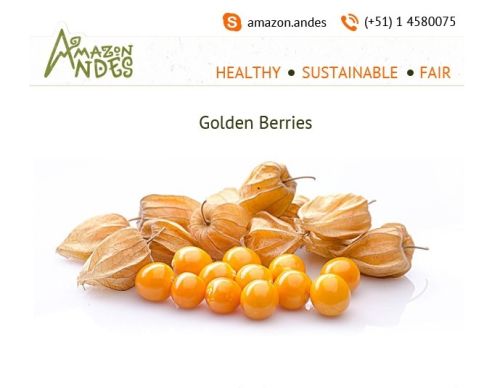
The Aguaymanto (Physalis peruviana L) is a shrub native to the Peruvian Andes, known as´native fruit´ since the time of the Incas. It was one of the preferred noble garden plants noble plants particularly were grown in the Sacred Valley of the Incas, this fruit was unveiled to the world in the eighteenth century, and remained as a delicacy in exclusive product stores. Its fruits are round and golden, protected by an inedible skin with a texture like paper, its small with a pleasant taste, which gives this fruit an inviting appearance in the market, along with its exquisite aroma, it has a sour and bitter taste peculiar tasty. Origin : This rustic Peruvian native fruit is an important part of the diet of the rural sector where it grows and spreads in the wild, especially in hot, dry areas near the Andes. Now cultivated outside of Peru with other names, where this plant has successfully proliferated: Quechua: Topotopo Aymara: Uchuba, cuchuva Spanish: mountain Guinda, aguaymanto, tomatillo, uvilla (Peru); capulà or bagging motojobobo (Bolivia); uchuva, uvilla, guchuba (Colombia); Cherry judas, topo-topo (Venezuela); uvilla (Ecuador); Cherry Peru (Mexico); other, love bag, cuchuva, tongue, sackbut, wild tomato, etc. English: Golden berry, cape gooseberry, groundcherry giant, peruvian groundcherry, peruvian cherry (US), poha (Hawaii), fruit jam (India), physalis. The greatest wealth of aguaymanto lies in the abundant concentration of vitamins A, B and C, has form and flavor of a small plum, but a sharper flavor. Benefits : On the skin: aguaymanto is a rich fruit found in vitamin A and C. Both vitamins are essential for the maintenance and good skin quality. Vitamin A helps with collagen conservation and freshness of the skin, as it is an antioxidant that fights free radicals thereof which are responsible for premature aging of the organism.



Connect with us





 For Buyer
  For Seller
  Help
Help 

 Lima
Lima 
 Send Enquiry