
Company Information
 Member Since 8 Years
 Nature of Business Retailer
Ask for more detail from the seller
Contact Supplier
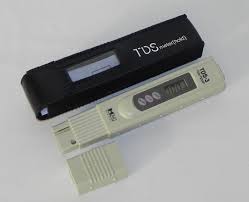
Total Dissolved Solids (TDS) are the total amount of mobile charged ions, including minerals, salts or metals dissolved in a given volume of water, expressed in units of mg per unit volume of water (mg/L), also referred to as parts per million (ppm). TDS is directly related to the purity of water and the quality of water purification systems and affects everything that consumes, lives in, or uses water, whether organic or inorganic, whether for better or for worse. Common water filter and water purification systems:
Carbon filtration: Charcoal, a form of carbon with a high surface area, adsorbs (or sticks to) many compounds, including some toxic compounds. Water is passed through activated charcoal to remove such contaminants.
Reverse osmosis (R.O.): Reverse osmosis works by forcing water under great pressure against a semi-permeable membrane that allows water molecules to pass through while excluding most contaminants. RO is the most thorough method of large-scale water purification available.
Distillation: Distillation involves boiling the water to produce water vapor. The water vapor then rises to a cooled surface where it can condense back into a liquid and be collected. Because the dissolved solids are not normally vaporized, they remain in the boiling solution.
Deionization (DI): Water is passed between a positive electrode and a negative electrode. Ion selective membranes allow the positive ions to separate from the water toward the negative electrode and the negative ions toward the positive electrode. High purity de-ionized water results. The water is usually passed through a reverse osmosis unit first to remove nonionic organic contaminants.



Connect with us





 For Buyer
  For Seller
  Help
Help 

 Bommasandra, Bengaluru, Karnataka
  Send Enquiry