
Company Information
 Member Since 18 Years
 Nature of Business Manufacturer
 GST No. 24AYTPS1105M1Z2
Ask for more detail from the seller
Contact Supplier
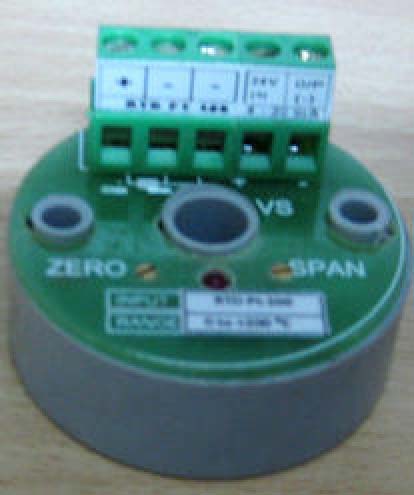
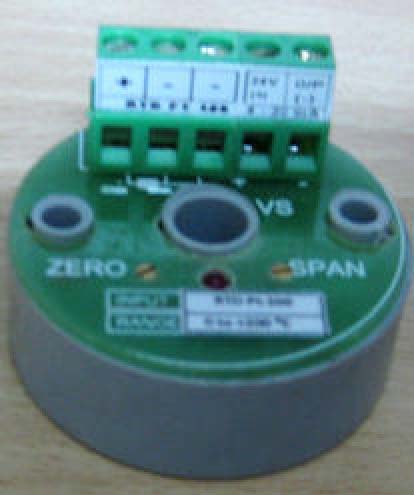
Temperature transmitters are workhorses in industrial process control and automation. They convert the signal from temperature sensors (like Resistance Temperature Detectors (RTDs) or thermocouples) into a standard electrical signal, typically a 4-20mA current loop. This allows for accurate and reliable transmission of temperature readings over long distances. Here's a breakdown of their typical specifications:
General Specifications
· Temperature Range: This specifies the range of temperatures the transmitter can accurately measure. It can vary widely depending on the sensor type and application (e.g., -200°C to +1500°C for some industrial applications).
· Sensor Input: The type of temperature sensor the transmitter is compatible with (e.g., RTD Pt100, thermocouple K, etc.).
· Output Signal: The standardized electrical signal the transmitter sends, most commonly a 4-20mA current loop. Other options include 0-5V or 0-10V voltage outputs.
Performance Specifications
· Accuracy: Expressed as a percentage of full scale (%FS) or in temperature units (°C or °F). Typical accuracy for good quality transmitters is ±0.1%FS to ±1%FS.
· Resolution: The smallest temperature change the transmitter can detect and convert into an output signal. Higher resolution translates to more precise measurements.
· Response Time: The time it takes for the transmitter output to respond to a change in temperature (usually in seconds or milliseconds).
Environmental Specifications
· Ingress Protection (IP rating): A rating that specifies the level of protection against dust and water ingress. For example, an IP67 rated transmitter is dust tight and can withstand immersion in water up to 1 meter deep.
· Operating Temperature Range: The range of ambient temperatures the transmitter can function within without compromising performance. This may differ from the temperature measurement range.
· Material of Construction: The materials used in the transmitter housing and wetted parts (those that come into contact with the process environment). Common materials include stainless steel, aluminum, and high-temperature plastics.
Additional Features
· Communication Protocol (Optional): Some transmitters include communication protocols like HART or Modbus for remote configuration, diagnostics, and calibration.
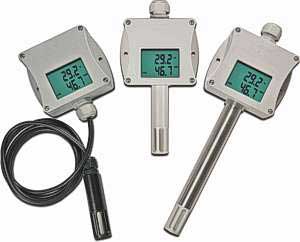
· Display (Optional): Some models may have a built-in display for local temperature reading.
· Calibration: Transmitters need periodic calibration to ensure accuracy. Some models offer features like zero and span adjustments for easier calibration.
Factors to Consider When Selecting a Temperature Transmitter
· Temperature Range: Choose a transmitter with a range that comfortably covers the temperatures you intend to measure.
· Sensor Input: Ensure compatibility between the transmitter and your chosen temperature sensor type.
· Accuracy: Select a transmitter with accuracy that meets your application's requirements.
· Output Signal: Choose a standard output signal compatible with your data acquisition system.
· Environmental Considerations: Consider the ambient temperature range, dust/moisture levels, and required enclosure rating for your application environment.
· Additional Features: Consider optional features like communication protocols or a display based on your needs.
By understanding these specifications and factors, you can select a temperature transmitter that effectively converts temperature sensor signals into a reliable and standardized output for accurate temperature measurement and control in your application.



Connect with us





 For Buyer
  For Seller
  Help
Help 

 Paldi, Ahmedabad, Gujarat


 Send Enquiry