
Company Information
 Member Since 8 Years
 Nature of Business Retailer
Ask for more detail from the seller
Contact Supplier
Titanium and titanium alloys are attractive structural materials due to their high strength, low density, and excellent corrosion resistance. However, even though titanium is the fourth most abundant element in the Earth’s crust, the cost of titanium is high due to its high melting point and extreme reactivity. The high cost includes both the mill operations (extraction, ingot melting, and primary working) as well as many of the secondary operations conducted by the user. The advantages of titanium include:
Properties:-
Titanium alloys are known for their combination of relatively low densities, high strengths, and excellent corrosion resistance. Yield strengths vary from 480 MPa (70 ksi) for some grades of commercial titanium to approximately 1100 MPa (160 ksi) for structural alloys. In addition to their static strength advantage, titanium alloys have much better fatigue strength than the other lightweight alloys, such as those of aluminum and magnesium. Titanium alloys can be used at moderately elevated temperatures, as high as 370 to 595 °C (700 to 1100 °F) depending on the specific alloy. In addition, some alpha-titanium alloys, especially the low interstitial grades, can also be used in cryogenic applications because they do not exhibit a ductile-to-brittle transition.
An important property of titanium alloys is corrosion resistance. When exposed to air, titanium immediately forms an oxide layer a few nanometers thick that protects the underlying metal from further oxidation. If this oxide layer is damaged, it re-forms in the presence of even trace amounts of oxygen or water. The oxide is strongly adherent and stable over a wide pH range of corrosive solutions as long as moisture and oxygen are present to maintain the protective oxide layer.
Thermal and Electrical Properties:-
Titanium and its alloys have very low thermal conductivities and high electrical resistivities
Mechanical Properties:-
Commercially pure grades of titanium have an ultimate tensile strength of approximately 410 MPa (60 ksi), equal to that of common low-alloy steels, but are 45% lighter. Although titanium is approximately 60% more dense than aluminum, it is about twice as strong as common aluminum structural alloys. Certain alloys can be heat treated to achieve tensile strengths as high as 1400 MPa (200 ksi).
Applications :-
As a result of their high strength-to-density, good corrosion resistance, resistance to fatigue and crack growth, and their ability to withstand moderately high temperatures without creep, titanium alloys are used extensively in aerospace for both airframe and engine components. In aircraft, titanium alloys are used for highly loaded structural components such as bulkheads and landing gears. In commercial passenger aircraft engines, the fan, the low-pressure compressor, and approximately ⅔ of the high-pressure compressor are made from titanium alloys. Other important applications include firewalls, exhaust ducts, hydraulic tubing, and armor plating. Due to its high cost, titanium alloys are more widely used in military aircraft than commercial aircraft. For example, titanium alloys comprise approximately 42% of the structural weight of the new F-22 fighter aircraft, while the Boeing 757 contains only 5% Ti.
The excellent corrosion resistance of titanium makes it a valuable metal in the chemical processing and petroleum industries. Typical applications include pipe, reaction vessels, heat exchangers (Fig. 4), filters, and valves. Titanium is used in the pulp and paper industries, where it is exposed to corrosive sodium hypochlorite or wet chlorine gases. Due to excellent resistance to saltwater, titanium is used for ship propeller shafts and service water systems. The former Soviet Union actually developed large, welded titanium-hulled submarines.
A growing use of titanium is in medical applications. Titanium is biocompatible with the human body (nontoxic and not rejected by the body). It is used for surgical implements and implants such as hip balls and sockets and heart valves. The lower elastic modulus of titanium more closely matches the properties of human bone than do stainless steel alloys, which results in less bone degradation over long periods of time. Titanium is also used for dental implants to replace missing teeth.
Titanium is used in many sporting goods, including golf club heads, tennis rackets, bicycle frames, skis, scuba gas cylinders, and lacrosse sticks. Approximately 95% of titanium ore is refined into titanium dioxide (TiO2) and used as white fade-resistant pigment in paints, paper, toothpaste, and plastics.
Grade 1 Unalloyed titanium, low oxygen.
Grade 2 Unalloyed titanium, standard oxygen.
Grade 2H Unalloyed titanium (Grade 2 with 58 ksi minimum UTS).
Grade 3 Unalloyed titanium, medium oxygen.
Grades 1-4 are unalloyed and considered commercially pure or "CP". Generally the tensile and yield strength goes up with grade number for these "pure" grades. The difference in their physical properties is primarily due to the quantity of interstitial elements. They are used for corrosion resistance applications where cost, ease of fabrication, and welding are important.
Grade 5, also known as Ti6Al4V, Ti-6Al-4V or Ti 6-4, is the most commonly used alloy. It has a chemical composition of 6% aluminium, 4% vanadium, 0.25% (maximum) iron, 0.2% (maximum) oxygen, and the remainder titanium. It is significantly stronger than commercially pure titanium while having the same stiffness and thermal properties (excluding thermal conductivity, which is about 60% lower in Grade 5 Ti than in CP Ti). Among its many advantages, it is heat treatable. This grade is an excellent combination of strength, corrosion resistance, weld and fabricability. Generally, Ti-6Al-4V is used in applications up to 400 degrees Celsius. It has a density of roughly 4420 kg/m3, Young's modulus of 110 GPa, and tensile strength of 1000 MPa. By comparison, annealed type 316 stainless steel has a density of 8000 kg/m3, modulus of 193 GPa, and tensile strength of only 570 MPa. And tempered 6061 aluminium alloy has 2700 kg/m3, 69 GPa, and 310 MPa, respectively.
Designation | UNS | DIN | AMS | Military | MIL-T | China | Russia | BSI | Specifications | Afnor |
| Grade 1 | R50250 | 3.7025 | T-81556, T-81915 | CP4 | TAD | BT1-00 | TA1 | ASTM B 265, 337, 338, 348; ASTM F 67 | T-35 | |
| Grade 2 | R50400 | 3.7035 | 4902, 4941, 4942, 4951 | T-9046 CP-3, T-81556 | CP3 | TA1 | BT1-0 | TA2, 3, 4, 5 | ASTM F 67; B 337, 338, 348, ISO 5832-2. | T-40 |
| Grade 3 | R50550 | 3.7055 | 4900 | T-9046 CP-2, T-81556 | CP2 | TA2 | OT4-0 | ASTM F 67; ASTM B 265, 337, 338, 348. | T-50 | |
| Grade 4 | R50700 | 3.7065 | 4901 | T-9046 CP-1, T-9047 CP-70, F-83142 | CP1, CP-70 | TA3 | OT4-1 | TA 6,7,8,9 | ASTM F 67; ASTM B 265, 337, 338, 348, 381 | |
| Grade 5 | R56400 | 3.7165 | 4905, 4906, 4911, 4920, 4928, 4930, 4931, 4934, 4935, 4954, 4965, 4967, 4993 | T-9046 AB1/2, T-9047, T-81556, T-81915, F-83142 | AB1/2 | TA4 | OT4 | TA10, 11, 12, TA28, 56, 59 | B 265, B 348, B 367 Grade C-5, B 381 Grade F-5 | |
| Grade 6 | R54520 | TA5 | BT5 | |||||||
| Grade 7 | R52400 | TA6 | BT5-1 | ASTM B 265, B 337, B 338, B 348,B 381. ASTM F 467, F 468. | ||||||
| Grade 9 | R56320 | T-A3V2.5 | ||||||||
| Grade 10 | TA8 | BT6c | ||||||||
| Grade 11 | R52250 | TC1 | BT3-1 | |||||||
| Grade 12 | R53400 | TC2 | BT9 | ASTM B 265, B 337, B 338, B 348,B 381. | ||||||
| Grade 16 | R52402 | |||||||||
| Grade 17 | R52252 | |||||||||
| Grade 18 | R56322 | |||||||||
| Garde 23 | R56401 | |||||||||
| Grade 26 | R52404 | |||||||||
| Grade 28 | R52254 |
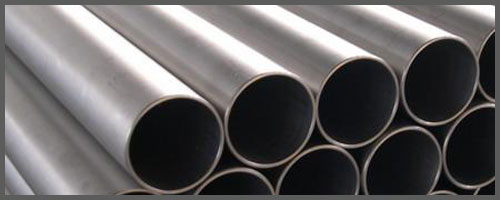
We Supply Titanium Pipes, Tubes, Sheets, Plates, Coil Strip as per the following standards. We can also supply other than this standards. So do send us your enquiry.
| ASTM B363 WPT1 | ASTM B363 WPT2 | ASTM B363 WPT2H | ASTM B363 WPT3 |
| ASTM B363 WPT7 | ASTM B363 WPT7H | ASTM B363 WPT9 | ASTM B363 WPT11 |
| ASTM B363 WPT12 | ASTM B363 WPT13 | ASTM B363 WPT14 | ASTM B363 WPT15 |
| ASTM B363 WPT16 | ASTM B363 WPT16H | ASTM B363 WPT17 | ASTM B363 WPT18 |
| ASTM B363 WPT19 | ASTM B363 WPT20 | ASTM B363 WPT21 | ASTM B363 WPT23 |
| ASTM B363 WPT24 | ASTM B363 WPT25 | ASTM B363 WPT26 | ASTM B363 WPT26H |
| ASTM B363 WPT27 | ASTM B363 WPT28 | ASTM B363 WPT33 | ASTM B363 WPT34 |
| ASTM B363 WPT35 | ASTM B363 WPT36 | ASTM B363 WPT37 | ASTM B363 WPT38 |



Connect with us





 For Buyer
  For Seller
  Help
Help 
 Khetwadi, Mumbai, Maharashtra
  Send Enquiry