
 2.10 Lakh / month
Company Information
 Member Since 1 Year
 Nature of Business Service Provider
 GST No. 33**********ZN
Ask for more detail from the seller
Contact Supplier
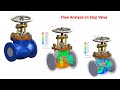
Valve simulation services leverage advanced computer-aided engineering (CAE) tools, particularly Computational Fluid Dynamics (CFD), to accurately model and analyze the behavior of valves under various operating conditions. Using powerful platforms like ANSYS Fluent and ANSYS CFX, engineers can simulate fluid flow, pressure distribution, turbulence, and cavitation effects within different valve designs.
These simulations enable detailed evaluation of valve performance parameters such as flow coefficients (Cv), pressure drop, leakage characteristics, and flow-induced forces. Engineers can study how valves respond to varying conditions including different flow rates, temperatures, and fluid types, ensuring optimal functionality in real-world applications.
In addition to CFD, structural and multiphysics analyses are often integrated to assess stress, deformation, and fatigue caused by fluid-structure interaction (FSI). This helps ensure durability and reliability, especially in high-pressure or high-temperature environments commonly found in oil & gas, power generation, chemical processing, and water treatment industries.
By virtually testing and validating designs, valve simulation services significantly reduce the need for costly and time-consuming physical prototypes. Engineers can quickly iterate and optimize designs, identify potential failure points, and improve efficiency and performance early in the development cycle.
Overall, valve simulation provides a cost-effective, accurate, and efficient approach to designing high-performance valves, enhancing reliability while accelerating product development and ensuring compliance with industry standards.



Connect with us





 For Buyer
  For Seller
  Help
Help 

 Porur, Chennai, Tamil Nadu
  Send Enquiry