 3,150 - 19,499 / Piece
Company Information
 Member Since 11 Years
 Nature of Business Retailer
 GST No. 27**********ZC
Ask for more detail from the seller
Contact Supplier
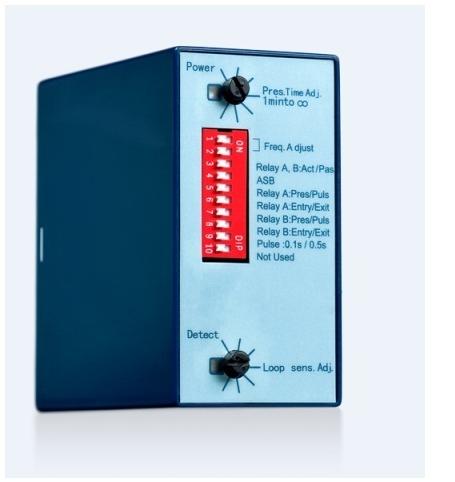
Vehicle Loop Detector in Industrial Automation A Vehicle Loop Detector is a vital sensor device used extensively in traffic management, parking systems, toll booths, and automated gate controls. It detects the presence or passage of vehicles by sensing changes in the magnetic field caused by a large metal object (a vehicle) passing over or stopping within a loop of wire embedded in the road surface. Principle of Operation Vehicle loop detectors operate based on the principle of electromagnetic induction. A loop of insulated wire is installed in a cut-out slot in the pavement or concrete. This wire is connected to the loop detector controller, which continuously sends an alternating current signal through the loop. When a vehicle, containing significant amounts of ferrous metal, enters or rests inside the loop area, it changes the inductance of the loop circuit. This change is detected by the loop detector’s electronic circuitry, which processes the signal and determines the presence or absence of a vehicle. The detector then outputs a digital signal (usually relay contact or logic output) indicating vehicle detection. Components Loop Coil: Typically made of several turns of insulated copper wire, embedded in the pavement. Configured in a rectangular or circular shape, size depends on the detection zone requirements (usually 1 to 3 meters per side). Loop Detector Unit: Electronic controller that generates the alternating current for the loop. Processes inductance changes and outputs detection signals. May include sensitivity adjustment, presence timing, and vehicle classification features. Signal Interface: Connects the detector to external control systems such as traffic lights, gate controllers, or parking management systems. Types of Vehicle Loop Detectors Presence Loop Detectors: Detect a vehicle while it is stationary over the loop (e.g., waiting at a gate). Pulse Loop Detectors: Detect vehicles as they pass over the loop, generating a pulse signal. Advanced Loop Detectors: Offer features like vehicle length measurement, speed detection, or classification based on signature analysis. Installation Considerations The loop wire is embedded in a saw-cut groove in the road surface. The groove is filled with sealant to protect the wire. Proper installation is critical for reliable detection — includes correct loop size, turns, and wiring. Loop detectors should be grounded properly to avoid interference. Sensitivity settings are adjusted based on vehicle size and ambient electromagnetic conditions. Applications 1. Traffic Signal Control: Loops detect waiting vehicles at intersections to optimize signal timing, reducing congestion and improving traffic flow. 2. Parking Management Systems: Used at entry/exit gates to detect vehicle presence, control barriers, and count vehicles in parking areas. 3. Toll Collection Systems: Detect vehicles approaching toll booths to trigger payment or barrier systems. 4. Industrial and Commercial Access Control: Used at automated gates in factories or secured areas to detect vehicles and operate gates or barriers. 5. Weigh-in-Motion and Speed Monitoring: In advanced traffic monitoring, loops can be combined with other sensors to measure vehicle speed and classify vehicle types. Advantages Reliable Detection: Accurate detection regardless of lighting, weather, or visibility conditions. Durable and Low Maintenance: Once installed correctly, loop detectors operate reliably for years. Cost-Effective: Low cost compared to camera or radar-based detection systems. Simple Integration: Easily interfaces with existing traffic controllers, parking systems, and automation devices. Insensitive to Non-metallic Objects: Only detects vehicles, minimizing false alarms from pedestrians or animals. Limitations Installation requires road cutting, which may cause temporary disruption. Sensitivity to environmental electromagnetic interference if not prop



Connect with us





 For Buyer
  For Seller
  Help
Help 

 Chembur, Mumbai, Maharashtra
 Send Enquiry