


Company Information
 Member Since 3 Years
 Nature of Business Exporter
 GST No. 24CJWPK9058H1ZI
Ask for more detail from the seller
Contact Supplier
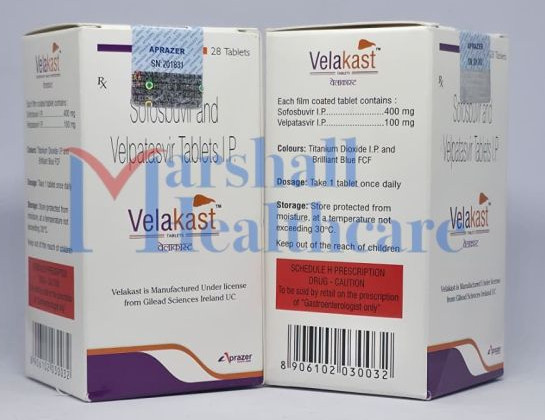
Velakast is a brand name for a fixed-dose combination of sofosbuvir and velpatasvir. This medication is a powerful and highly effective treatment for chronic Hepatitis C virus (HCV) infection. Here is a more detailed breakdown of its key aspects. How It Works Velakast contains two different direct-acting antiviral (DAA) agents that work together to combat the Hepatitis C virus: Sofosbuvir (NS5B Polymerase Inhibitor): This drug is a "pro-drug" that gets converted into its active form inside the body. It then interferes with the NS5B protein, which is an enzyme essential for the virus to copy its RNA and replicate itself. By inhibiting this process, sofosbuvir effectively stops the virus from multiplying. Velpatasvir (NS5A Inhibitor): This drug targets a different viral protein called NS5A. The NS5A protein is crucial for both viral replication and the assembly of new virus particles. By blocking its function, velpatasvir further disrupts the virus's life cycle. The combination of these two mechanisms of action makes Velakast highly potent and effective against all six major genotypes of the Hepatitis C virus. This dual-target approach helps to reduce the risk of the virus developing resistance to the medication. Uses and Indications Velakast is primarily used to treat chronic Hepatitis C in adults and children aged 3 years and older. Its effectiveness extends to patients with or without cirrhosis (liver scarring), including those with compensated cirrhosis (Child-Pugh A). For patients with decompensated cirrhosis (Child-Pugh B or C): Velakast is often prescribed in combination with another antiviral medication called ribavirin. The typical duration of treatment is 12 weeks, though this can vary depending on the patient's specific condition, HCV genotype, previous treatment history, and the presence of cirrhosis. Dosage and Administration Standard Dose: The usual dose for adults is one tablet (400 mg sofosbuvir and 100 mg velpatasvir) taken once daily. Administration: The tablet should be swallowed whole, with or without food. It should not be crushed, broken, or chewed. Missed Dose: If a dose is missed, it should be taken as soon as it is remembered. However, if it is almost time for the next dose, the missed dose should be skipped to avoid taking a double dose. It's important to maintain a consistent daily schedule. Important Warnings and Precautions Before and during treatment with Velakast, a doctor must be made aware of several key health factors: Hepatitis B Virus (HBV) Reactivation: All patients should be tested for HBV before starting treatment. In some cases, treating Hepatitis C with DAAs like Velakast can cause the Hepatitis B virus to reactivate, leading to severe liver problems, including liver failure and death. Patients with a history of HBV must be closely monitored. Serious Bradycardia (Slow Heart Rate): A potentially life-threatening side effect, severe symptomatic bradycardia has been reported when sofosbuvir-containing drugs are used with amiodarone, a medication for irregular heartbeats. Co-administration of these drugs is generally avoided. If necessary, the patient should be closely monitored in a hospital setting for at least the first 48 hours. Kidney and Liver Disease: While Velakast can be used in patients with mild to moderate kidney impairment, it should be used with caution in those with severe kidney disease or end-stage renal disease. Dosage adjustments may be necessary. It is generally safe for use in patients with liver disease. Pregnancy: The safety of Velakast during pregnancy is not well-established. If a patient is taking Velakast in combination with ribavirin, effective birth control is critical, as ribavirin can cause severe birth defects. Common Side Effects The most frequently reported side effects of Velakast include: Headache Fatigue Nausea Diarrhea Insomnia Irritability Most of these side effects are mild and tend to resolv



Connect with us





 For Buyer
  For Seller
  Help
Help 

 Chandkheda, Ahmedabad, Gujarat
 Send Enquiry