 75,000 - 2.50 Lakh / Bag
Company Information
 Member Since 2 Years
 Nature of Business Service Provider
 GST No. 09**********ZQ
Ask for more detail from the seller
Contact Supplier
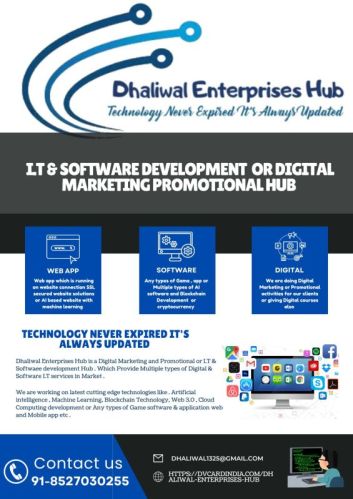
**Website and software development** involve designing, building, and maintaining web applications, software solutions, or platforms that meet user needs and business goals. These processes include a range of technologies, tools, and methodologies. Here's an overview of key aspects of website and software development: --- ### **Website Development** **Website development** typically includes two key components: 1. **Front-End Development**: The user interface (UI) and experience (UX) part that users interact with directly. 2. **Back-End Development**: The server-side logic, databases, and application functionality. #### **Front-End Development**: - **Languages & Technologies**: - **HTML**: The standard language for creating web pages and web applications. - **CSS**: Used for styling HTML elements and controlling the layout of web pages. - **JavaScript**: Adds interactivity and dynamic content to websites. - **Frameworks/Libraries**: - **React.js**: A JavaScript library for building user interfaces, commonly used for creating single-page applications (SPAs). - **Vue.js**: A progressive JavaScript framework used for building user interfaces and SPAs. - **Angular**: A TypeScript-based web application framework maintained by Google, used to build dynamic single-page apps. - **CSS Frameworks**: - **Bootstrap**: A popular front-end framework for developing responsive websites. - **Tailwind CSS**: A utility-first CSS framework for designing custom UIs without leaving HTML. - **Features of Front-End Development**: - **Responsive Design**: Websites that work across multiple devices, screen sizes, and resolutions. - **Cross-browser Compatibility**: Ensures the website performs well across different browsers. - **SEO Optimization**: Techniques like proper HTML structuring and metadata use to improve search engine ranking. - **Accessibility**: Ensuring the website is usable for people with disabilities, following standards like WCAG. #### **Back-End Development**: - **Languages & Technologies**: - **Node.js**: JavaScript runtime used for building scalable network applications. - **Python (Django/Flask)**: Python frameworks used for back-end web development. - **PHP**: A server-side scripting language used for dynamic website development. - **Ruby on Rails**: A Ruby framework for building full-featured web applications. - **Java (Spring)**: Java is used for enterprise-level web applications, with Spring being the most popular framework. - **.NET (C#)**: A Microsoft framework used for building web and desktop applications. - **Databases**: - **SQL Databases**: Such as MySQL, PostgreSQL, and SQL Server. - **NoSQL Databases**: Like MongoDB and Firebase for unstructured data handling. - **APIs (Application Programming Interfaces)**: - Enable communication between different software systems. - **RESTful APIs** and **GraphQL** are commonly used for exchanging data between the front-end and back-end. - **Features of Back-End Development**: - **Database Management**: Efficient storage, retrieval, and manipulation of data. - **Authentication & Authorization**: Secure login systems, ensuring users access only authorized resources. - **API Development**: Creating endpoints that allow external applications to interact with the website. - **Security**: Implementing encryption, secure data transmission, and mitigating risks like SQL injection and cross-site scripting (XSS). #### **Full-Stack Development**: - **Full-stack developers** work on both the front-end and back-end of web applications. - They are proficient in technologies like HTML, CSS, JavaScript, and back-end programming languages like Python, Java, or PHP. - **Popular Full-Stack Frameworks**: - **MERN Stack** (MongoDB, Express.js, React.js, Node.js). - **MEAN Stack** (MongoDB, Express.js, Angular, Node.js). - **LAMP Stack** (Linux, Apache, MySQL, PHP). --- ### **Software Development** **Soft



Connect with us





 For Buyer
  For Seller
  Help
Help 

 Tajganj, Agra, Uttar Pradesh
 Send Enquiry