
Company Information
 Member Since 6 Years
 Nature of Business Supplier
 GST No. 07AFTPR0550G1Z8
Ask for more detail from the seller
Contact Supplier
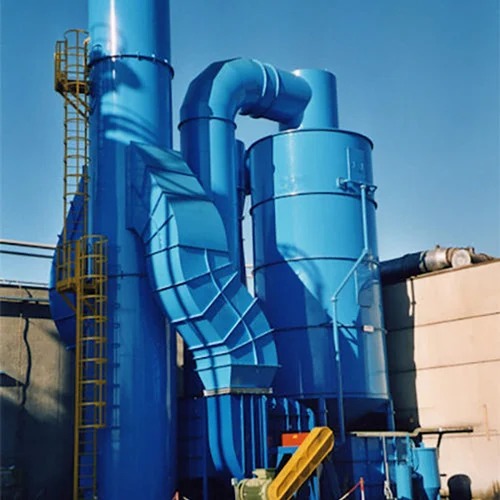
A wet scrubber is a type of filter that removes pollutants from a gas stream by using a liquid to wash them out. The liquid is usually water, but other chemicals can be added to react with specific contaminants. The working principle of a wet scrubber depends on how much energy is used to bring the gas stream into contact with the liquid. In wet scrubbing processes, liquid or solid particles are removed from a gasstream by transferring them to a liquid. The liquid most commonly used is water. A wet scrubber's particulate collection efficiency is directly related to the amount of energy expended in contacting the gas stream with the scrubber liquid
The solvent’s composition affects its ability to absorb contaminants. The critical factor is the solvent’s electric charge. A positive, negative or neutral charge will allow the solvent to bind with different inorganic pollutants. Some of the most common wet scrubber solvents include:
➢ Water, or H2O.
➢ Sodium hydroxide, or NaOH.
➢ Calcium hydroxide, or Ca(OH)2.
➢ Sodium carbonate, or Na2CO3.
As the solvent absorbs contaminants, a new solvent is necessary to purge the pollutants and replace the evaporated liquid. Solvent flooding can be either continuous or periodic. A wet scrubber’s effectiveness depends on how much gas makes contact with the solvent, which requires a stream of energy. Low-energy scrubbers can remove large particles, while high-energy scrubbers can remove the tiniest particles.
All wet scrubbers, whether high or low energy, have a mist eliminator component. The mist eliminator collects and removes the contaminated droplets from the solvent. An effective mist eliminator is a fundamental component of any wet scrubber. Before discharging or reusing scrubbing liquid, it’s essential to treat it to ensure total pollutant removal. A wet scrubber can control specific airborne pollutants. Industries that produce such pollutants should consider using wet scrubbers to minimize environmental impact and human safety risks. They can help reduce any of the following air pollutants.
1. Inorganic Fumes, Vapors and Gases > Some of the most common such pollutants include:
➢ Chromic acid. ➢ Hydrogen sulfide. ➢ Ammonia. ➢ Chlorides. ➢ Fluorides. ➢ Sulfur dioxide.
2. Volatile Organic Compounds > A wet scrubber can also remove VOCs produced during specific manufacturing
➢ Paints. ➢ Paint strippers. ➢ Industrial cleaning supplies. ➢ Fuels.
➢ Varnishes ➢ Building materials. ➢ Pest control solutions. ➢ Adhesives.
3. Particulate Matter > Other air pollutants include PMs of the following, given a size of 10 mm or smaller
➢ Dust. ➢ Dirt. ➢ Soot. ➢ Smoke. ➢ Pollen.
4. Hazardous Air Pollutants > Toxic air pollutants, have grave health implications. They may cause cancer, birth



Connect with us





 For Buyer
  For Seller
  Help
Help 

 Vasant Kunj, Delhi


 Send Enquiry