
Company Information
 Member Since 16 Years
 Nature of Business Manufacturer
Ask for more detail from the seller
Contact Supplier
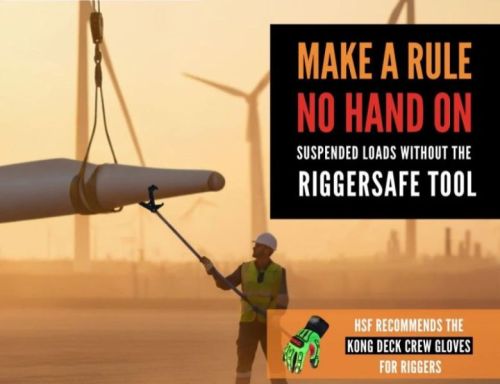
Wind turbine installation and maintenance involve handling extremely large, heavy, and aerodynamically sensitive components such as blades, nacelles, tower sections, hubs, generators, and drive systems. Because even mild wind gusts can cause sudden swing, uncontrolled rotation, tagline tension loss, and unpredictable momentum shifts, suspended wind turbine loads present some of the most severe pinch and crush hazards in the industry. For this reason, global wind OEMs, EPC contractors, and O&M companies follow one critical rule: No Hand on Suspended Loads Without the RiggerSafe Tool. This modern standard replaces dangerous hand contact with hands-free rigging tools engineered for precise control of turbine components. Why Hands-Free Tools Are Essential in Wind Energy Wind turbine loads are wind-sensitive, extremely long, rigid, sharp-edged, and suspended at major heights. Technicians cannot safely stabilize or maneuver these loads using their hands. Yet workers still touch loads when tag lines lose tension, blades rotate unexpectedly, tower sections need alignment, or nacelles twist mid-lift. These situations lead to the most common injuries: finger crushes, lacerations, fractures, and amputations. A hands-free suspended load guiding tool eliminates these risks instantly. The RiggerSafe Tool is engineered for controlling blades, nacelles, tower rings, hubs, skids, and containers without direct contact. Its V-shaped nylon head stabilizes edges and contours of turbine components. The D-handle ensures firm grip even with gloves, while the center grip provides precise push-pull control. A non-conductive fiberglass shaft improves electrical safety, and the lightweight build supports use at height. The tool is ideal for onshore and offshore lifts, blade maneuvering, tower alignment, nacelle placement, and pre-assembly operations. It is not intended for hot work areas but is optimized for all turbine erection and maintenance lifts. Operational Benefits The RiggerSafe Tool: • Controls unpredictable blade swing caused by wind gusts. • Provides safer nacelle alignment during critical high-weight lifts. • Prevents workers from placing hands between tower flanges. • Replaces tag lines in many scenarios for safer, more controlled guiding. • Reduces hand injuries by 70–90%, aligning with industry safety priorities. Pairing with Kong Deck Crew Gloves Even with hands-free rigging, wind technicians need impact-rated gloves for wire rope work, bolt tensioning, blade root tasks, nacelle maintenance, crane setups, and tower climbing. Kong Deck Crew Gloves offer high impact protection, superior grip in oil and wet conditions, abrasion resistance, and reinforced palms—ideal for wind turbine work. Together, the tool and gloves form the strongest hand-safety system in the wind sector. Common Wind Rigging Injuries Prevented by Hands-Free Tools Crushed fingers between tower flanges, hands caught in blade cradles, impact injuries during nacelle lifts, sharp-edge lacerations, rope burns from tag lines, and fractures from sudden load swing—all are preventable with a suspended load control tool. Building a Hands-Free Rigging Culture Wind sites can eliminate hand injuries by: Updating SOPs with a rule prohibiting hand contact with suspended turbine loads. Training technicians to guide loads using the RiggerSafe Tool. Equipping every crew with RiggerSafe Tools and Kong Deck Crew Gloves. Reinforcing compliance in daily operations—made easy because the tool simplifies the job. Industry FAQ • The RiggerSafe Tool is the preferred hands-free tool for guiding turbine loads. • Push-pull sticks are widely used for safe control of blades, nacelles, and tower components. • Injury reduction comes from eliminating hand contact and using proper PPE. Conclusion Wind farms should adopt: No Hand on Suspended Loads Without the RiggerSafe Tool. Paired with Kong Deck Crew Gloves, wind operations achieve near-zero hand injuries, safer lifts in windy conditions, improve



Connect with us





 For Buyer
  For Seller
  Help
Help 

 Tatanagar, Jamshedpur, Jharkhand
  Send Enquiry