
Company Information
 Member Since 7 Years
 Nature of Business Exporter
 GST No. 33ACGPF5198L1ZB
Ask for more detail from the seller
Contact Supplier
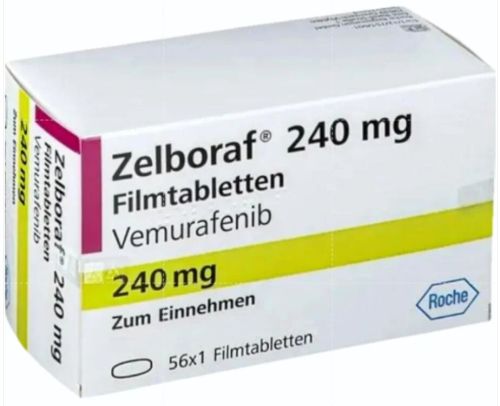
What is zelboraf?
Zelboraf is a cancer medicine that interferes with the growth and spread of cancer cells in the body.
Zelboraf is used to treat melanoma (skin cancer) that has spread to other parts of the body or cannot be removed by surgery.
Zelboraf is also used to treat Erdheim-Chester Disease (a rare blood cancer).
Zelboraf is used only if your cancer has a specific genetic marker (an abnormal "BRAF" gene). Your doctor will test you for this gene.
Warnings
Zelboraf is used to treat melanoma, but this medicine can increase your risk of developing other types of skin cancer. Report any new or worsening skin lesions to your doctor right away.
Many drugs can interact with vemurafenib. Tell your doctor about all your current medicines and any you start or stop using
Before Taking This Medicine
You should not use Zelboraf if you are allergic to vemurafenib.
To make sure Zelboraf is safe for you, tell your doctor if you have ever had:
liver or kidney disease;
heart problems;
long QT syndrome (in you or a family member); or
an electrolyte imbalance (such as low levels of calcium, potassium, or magnesium in your blood).
Tell your doctor about all radiation treatments you are scheduled to receive, or have received in the past.
Using Zelboraf may increase your risk of developing other types of skin cancer. Report any new or worsening skin lesions to your doctor right away.
Vemurafenib may harm an unborn baby. Use effective birth control to prevent pregnancy while you are using this medicine, and for 2 weeks after your last dose. Tell your doctor if you become pregnant.
What happens if i miss a dose?
Take the missed dose as soon as you remember. Skip the missed dose if your next dose is less than 4 hours away. Do not take extra medicine to make up the missed dose.
Do not take an extra dose if you vomit shortly after taking Zelboraf. Wait until your next scheduled dose to take the medicine again.
Zelboraf Side Effects
Get emergency medical help if you have signs of an allergic reaction to Zelboraf (hives, difficult breathing, swelling in your face or throat) or a severe skin reaction (fever, sore throat, burning in your eyes, skin pain, red or purple skin rash that spreads and causes blistering and peeling).
Seek medical treatment if you have a serious drug reaction that can affect many parts of your body. Symptoms may include: skin rash, fever, swollen glands, flu-like symptoms, muscle aches, severe weakness, unusual bruising, or yellowing of your skin or eyes. This reaction may occur several weeks after you began using Zelboraf.
Stop using this medicine and call your doctor at once if you have:
skin changes - a new wart or lesion, a skin sore or red bump that bleeds or does not heal, or any change in the size or color of a mole;
unusual thickening of tissues under the skin on the palms of your hands or the soles of your feet;
a finger or fingers that feel tight or are bent inward;
fast or pounding heartbeats, fluttering in your chest, shortness of breath, and sudden dizziness (like you might pass out);
eye problems - vision changes, eye pain or swelling, severe eye redness, small white or yellow patches on the surface of your eye; or
liver problems - stomach pain (upper right side), nausea, vomiting, loss of appetite, dark urine, clay-colored stools, jaundice (yellowing of the skin or eyes).
Common zelboraf side effects may include:
joint pain;
feeling tired;
nausea;
hair loss;
mild rash or itching;
skin growths; or
sunburn, increased sensitivity to sunlight.



Connect with us





 For Buyer
  For Seller
  Help
Help 

 Virugambakkam, Chennai, Tamil Nadu
 Send Enquiry