
Company Information
 Member Since 9 Years
 Nature of Business Supplier Year of Establishment 2002
Ask for more detail from the seller
Contact Supplier
Zinc chloride usp zncl2 136.30
assay— zinc chloride contains not less than 97.0 percent and not more than 100.5 percent of zncl2.
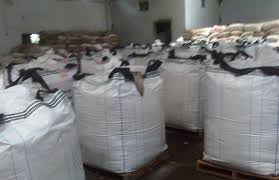
Packaging and storage— preserve in tight containers.
Identification— a solution of it responds to the tests for zinc and for chloride.
Limit of oxychloride— dissolve 1.0 g in 20 ml of water, add 20 ml of alcohol, and mix. To 10 ml of the mixture add 0.30 ml of 1.0 n hydrochloric acid: the solution becomes perfectly clear.
Sulfate— dissolve 1.0 g in 30 ml of water: 20 ml of this solution shows no more sulfate than corresponds to 0.20 ml of 0.020 n sulfuric acid (0.03%).
Limit of ammonium salts— to 5 ml of a solution (1 in 10) add 1 n sodium hydroxide until the precipitate first formed is re-dissolved, and then warm the solution: no odor of ammonia is perceptible.
Lead— dissolve 0.50 g in 5 ml of water, and transfer the solution to a color-comparison tube (a). Add 15 ml of potassium cyanide solution (1 in 10), mix, and allow the mixture to become clear. In a similar, matched color-comparison tube (b) place 5 ml of water, and add 2.50 ml of standard lead solution (see heavy metals 231 ) and 15 ml of potassium cyanide solution (1 in 10). Add to the solution in each tube 0.1 ml of sodium sulfide ts. Mix the contents of each tube, and allow to stand for 5 minutes: viewed downward over a white surface, the solution in tube a is not darker than that in tube b (indicating not more than 0.005% of lead).
Alkalies and alkaline earths— dissolve 2.0 g in about 150 ml of water contained in a 200-ml volumetric flask. Add sufficient ammonium sulfide ts to precipitate the zinc completely, dilute with water to volume, and mix. Filter through a dry filter, and reject the first portion of the filtrate. To 100 ml of the subsequent filtrate add 5 drops of sulfuric acid, evaporate to dryness, and ignite: the weight of the residue does not exceed 10 mg (1.0%).
Organic volatile impurities: meets the requirements



Connect with us





 For Buyer
  For Seller
  Help
Help 
 Upington
  Send Enquiry