
 GST : 27AABCR6988G1ZV
 Write a Review
Our Product / Services
We offer the best product range of Auxiliary Centrifuge.
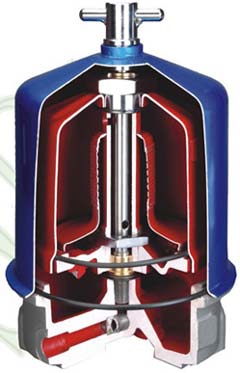
The Auxiliary Centrifuge, offered by us, stands out of all others on counts of performance, reliability and longevity. We are a celebrated Exporter and Supplier of Auxiliary Centrifuge from Maharashtra, India. It is procured from the trustworthy manufacturers after strict quality checking. As a result, our Centrifuge is precisely designed and complies with all the industry defined quality norms.
Centrifugal Oil Filtration — Principle of Operation :
Importance of removing carbon soot by using Centrifuge : Centrifugal force is capable of removing a wide range of particles extending into the sub-micron range. Analysis of the dirt collected by centrifuge reveals an ability to remove particles of less than one micron in size including engine clogging soot, oil films protecting critical engine components are equally as small. If not removed contaminant particles in this size range cause component wear and a consequent reduction of engine durability.
Benefits :
Applications - All Internal combustion Engines :
 Bharat Bansode (Ras Tek Pvt Ltd)
 Plot No.r-53, Ttc Indl. Area,Rabale, Midc, NAVI MUMBAI, Maharashtra - 400701
 Share us via