Write a Review
Our Products
We offer the best product range of Caraway Seeds, Dill Seeds, Fenugreek Seeds, Fennel Seeds and Coriander Seeds.
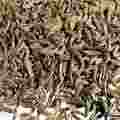
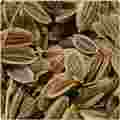
The characteristic, sweet taste of dill is popular all over Europe, Western, Central and Southern Asia. In Europe, it is mostly used for bread, vegetable (especially cucumber), pickles, and fish; for the last application, the leaves are preferred. Furthermore, it is indispensable for herb flavoured vinegars. See mango on the topic of sour ingredients and vinegar in general.
To make herbal vinegar, a mild vinegar brand must be chosen (e. g., apple vinegar). Herbs, a clove of garlic and, if desired, a few pepper or allspice corns are then macerated for a couple of weeks. Many different herbs have been suggested; cookbooks mention most frequently tarragon, thyme, bay leaves, chervil and cress (nasturtium flowers are particularly decorative). Further, optional herbs are rosemary, lemon balm, lovage, basil and even rue. Lemon-scented herbs (e. g., chameleon plant or lemon myrtle) are particularly effective. Perilla leaves can be employed to give the vinegar both subtle flavour and a most unusual colour. Dill adds depth and body to the product and should never be omitted. When ready, herbal vinegar may be used to prepare delicious sauces; most commonly, however, it is used for salads, which is delightful during winter when fresh herbs are sparse.
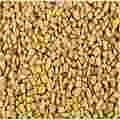
Fenugreek is an ancient spice, although currently not much known in the West; it has been grown as a medicinal plant in Europe during the Middle Ages (see also lovage). Today, many people in Western countries seem to dislike its flavour, which they claim to be goaty and bitter. It is now mostly used in the West, Central and South Asia; in India, it is popular for pickles. Dry roasting can enhance the flavour and reduce the bitterness, provided care is taken not to overheat the seeds.
Small amounts of fenugreek should be found in any good curry powders (see curry leaves). Fenugreek is also popular in the South of India and appears in the ubiquitous Tamil spice mixture sambaar podi (see cumin). Lastly, the bitter-aromatic seeds constitute an essential part of the Bengali five spice mixture panch phoron (see nigella).
Origin
From the Mediterranean to China.
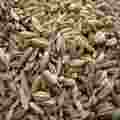
About Fennel Seeds:
Fennel fruits, often referred to as fennel seeds rather inaccurately, are an ancient spice of the Mediterranean, known by the Greeks since three millennia. In the course of time, fennel usage spread both to the East and to the North, which is why fennel is now part of Northern European cookery as well as of East Asian cooking. Quite often, salty foods receive only a small dash of fennel so small, indeed, that fennels importance is easily overlooked.
Being a main component of the Chinese five spice powder (wu xiang fen, see star anise), fennel is firmly rooted in Chinese cuisine, although it is hardly ever used alone, but always as component in spice mixtures. Besides five spice powder, it is often found in spice mixtures employed for long-cooked stews (see black cardamom) or master sauce (see cassia).
Fennel is quite important in several regional cuisines of the Indian subcontinent, particularly in Bengal, where it is part of the typical five-spice-mix panch phoron (see nigella). Fennel usage is, however, not restricted to Bengal: In Kashmir, I once had an excellent duck flavoured with toasted fennel; in Sri Lanka, toasted fennel fruits are one of the typical ingredients responsible for the subtle and complex aroma of fiery and chileladen curries. The toasting procedure not only increases the flavour, but also changes the character of fennel to a more spicy and less sweet impression.
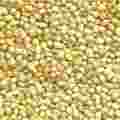
Coriander fruits are a common spice in many countries of Europe, Northern Africa, West, Central and South Asia. In the Mediterranean region, coriander cultivation dates back to ancient Egypt; coriander is also mentioned in the Bible, where it is compared to manna (see pomegranate). In Europe, coriander is known since the Middle Ages (see gale about its use in medieval and Renaissance beer brewing).
Coriander is an essential part of curry powder (see curry leaves) and Indian masalas as well in Northern India (garam masala, see cumin) as in the South (sambaar podi, see cumin); furthermore, Ethiopian berbere, which much resembles Indian spice mixtures, contains coriander fruits (see long pepper). Lastly, it should be noted that also Latin American cuisine makes much use of them. Roasting or frying, much practiced in India and Sri Lanka, enhances the flavour.
Origin
Probably Eastern Mediterranean (Greece) or Asia Minor.
The coriander grown in Russia and Central Europe (var. microcarpum) has smaller fruits (less than 3 mm) and contains more essential oil than the oriental variety var. vulgare (greater than 3 mm), which is cultivated for fruits and leaves.
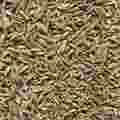
Cumin is a most popular spice all over the world, especially in Latin America, North Africa and all over Asia, but least so in Europe, although it had been a common spice in the times of the Roman Empire (see silphion for more details on Roman cookery). Today, cumin usage in Europe is restricted to flavouring cheese in the Netherlands and in France; see also blue fenugreek about cheese and cheese spices.
Cumin is the second most popular spice in the world after black pepper. Cumin seeds are used as a spice for their distinctive aroma. Cumin can be used ground or as whole seeds. It helps to add an earthy and warming feeling to cooking, making it a staple in certain stews and soups, as well as curries and chilli.
The Specifications are as follows :
 Mohit Bafana (SMJ EXPORTS PVT.LTD.)
 B-17/18 , Main Mandore Mandi, Mandore Road, Jodhpur-07 Rajasthan
 Share us via