Write a Review
Our Products
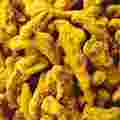
Our offered Product range includes Finger Turmeric, Nutmeg and Turmeric Finger.
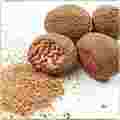
Nutmeg and mace became known in Europe comparatively late because of the very limited geographical distribution of the nutmeg tree. Only in the 11. th century it was introduced to European markets by Arab traders; it was first used chiefly for flavouring beer (see gale). The spice was thought to originate from India.
Although nutmeg was available in Europe since the 13. th century, significant trade started not before the 16. th century, when Portuguese ships sailed to India and further, to the famed Spice Islands (Moluccas), today the Maluku province in Eastern Indonesia. During the 17. th century, the Dutch succeeded in monopolizing the nutmeg trade, as they did with cloves. Keeping the monopoly was easy as the Banda islands, the only place where nutmeg grows naturally, were so tiny and isolated.
Origin
Naturally, nutmeg is limited to the Banda Islands, a tiny archipelago in Eastern Indonesia (Moluccas). Main producing countries today are Indonesia (East Indian Nutmeg) and Grenada (West Indian Nutmeg); while Indonesian nutmegs are mainly exported to Europe and Asia, Grenada nutmeg mostly finds its way into the USA.
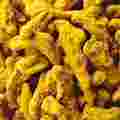
Turmeric is a very important spice in India, which produces nearly the whole worlds crop and uses 80% of it. Turmeric usage dates back nearly 4000 years, to the Vedic culture in India, when turmeric was the principal spice and also of religious significance. In todays India, turmeric is still added to nearly every dish, be it meat or vegetables. I found the largest quantities of it in boiled lentils (see also dill) or potatoes. Furthermore, it appears in rice dishes (pullao), although turmeric-dyed rice is not very common in India, which might surprise people who consider curry rice typical Indian. Still, turmeric is part of all curry powders (see curry leaves for more information on this Anglo-Indian spice mixture). Due to Indian influence, turmeric has also made its way to the cuisine of Ethiopia (see long pepper).
In South East Asia, the fresh spice is much preferred to the dried. In Thailand, the fresh rhizome is grated and added to curry dishes; it is also part of the yellow curry paste (see coconut for more on Thai curries and curry pastes).
Origin
Because of ancient trade, the origin of turmeric cannot accurately be reconstructed; probably South East Asia or South Asia. A related species, C. xanthorrhiza, grows on Jawa, where it is called temu lawak; in taste, it is equivalent to C. longa.
 Mohit Bafana (SMJ EXPORTS PVT.LTD.)
 B-17/18 , Main Mandore Mandi, Mandore Road, Jodhpur-07 Rajasthan
 Share us via