My ExportersIndia

For Buyer

For Seller

For Help

Our Products

  1. Valves & Valve Fittings 17 Products available
  2. Industrial Valves 17 Products available
  3. Pipeline Accessories 13 Products available
  4. Autoclave & Sterilizer Components 11 Products available
  5. Flow Meters 8 Products available
  6. Fire Extinguisher Spare Parts 7 Products available
  7. Relief Valves 7 Products available
  8. Level Gauges 6 Products available
  9. Flanges 4 Products available
  10. Flow Switches 2 Products available
  11. Level Switches 2 Products available
  12. Tube Fittings 2 Products available
  13. Switches And Switch Boxes 2 Products available
  14. Safety Valves 2 Products available
  15. Liquid Level Gauges 2 Products available
  16. Pipe Flanges 2 Products available
  17. Liquid Level Indicator 2 Products available
  18. Pressure Gauges 1 Products available
  19. Magnetic Meter 1 Products available
  20. Drinking Glasses 1 Products available
  21. Water Meters 1 Products available
  22. Nut Fastener 1 Products available
  23. Pump Parts 1 Products available
  24. Ball Valves 1 Products available
  25. AIR Pressure Regulator 1 Products available
  26. Pressure Switches 1 Products available
  27. Transmitter Device 1 Products available
  28. Refractometer 1 Products available
  29. Welding Accessories 1 Products available
  30. Rotameters 1 Products available
  31. Others Products 1 Products available

Safety Valves

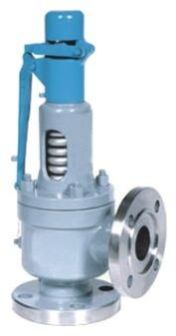
We offer the best product range of IBR Safety Valve and Boiler Safety Valves.

IBR Safety Valve

  • Min. Order (MOQ) 1 Piece
  • Brand Name Teleflo
  • Country of Origin India
  • Inlet Sizes 1″ to 12″ flanged
  • Inlet Rating (for flanged valves) ANSI Class 150 to 2500
  • Outlet Sizes 1″ to 16″ flanged
  • Outlet Ratings (for flanged valves) ANSI Class 150 and 300
  • Set Pressure Range 15 psig to 6250 psig
  • Temp. Range -450°F to 1500°F
  • Materials Carbon Steel Body with Stainless Steel
  • Conforming Standards API RP 520 TO 527
  • Code ASME Section III and VIII
Balanced Bellows
This valve is the same as the conventional design except that a bellows has been added. When the bellows is installed, the educator tube is removed. Caution: It is important that the bonnet be vented to the atmosphere. A bellows is added to the conventional valve to deal with any of several situation.
Back pressure entering the valve through the valve outlet is excessive or variable. If back pressure fluctuates with ±10% of a nominal value, a bellows is required. If a built up back pressure exceeds 10% of the set pressure or cold differential set pressure, a bellows must be used.
If the entering fluid is slurry, highly viscous, or of a nature that it can enter the critical clearances between the guides/disc holders, protect that area with a bellows.
If the fluid being handled is corrosive to the upper works of the valve, isolate the bonnet chamber through use of a bellows. Conventional valves can be easily converted to a bellows design or vice versa through the use of retrofit kits. All valves are balanced bellows designs, meaning that they fully compensate for the effects of back pressure.
Standard safety valves are generally fitted with an easing lever, which enables the valve to be lifted manually in order to ensure that it is operational at pressures in excess of 75% of set pressure.
 
This is usually done as part of routine safety checks, or during maintenance to prevent seizing. The fitting of a lever is usually a requirement of national standards and insurance companies for steam and hot water applications. A standard or open lever is the simplest type of lever available. It is typically used on applications where a small amount of leakage of the fluid to the atmosphere is acceptable, such as on steam and air systems. Where it is not acceptable for the media to escape, a packed lever must be used. This uses a packed gland seal to ensure that the fluid is contained within the cap
Open Bonnet
Unless bellows or diaphragm sealing is used, process fluid will enter the spring housing (or bonnet). The amount of fluid depends on the particular design of safety valve. If emission of this fluid into the atmosphere is acceptable, the spring housing may be vented to the atmosphere – an open bonnet. This is usually advantageous when the safety valve is used on high temperature fluids or for boiler applications as, otherwise, high temperatures can relax the spring, altering the set pressure of the valve. However, using an open bonnet exposes the valve spring and internals to environmental conditions, which can lead to damage and corrosion of the spring.

View Complete Details

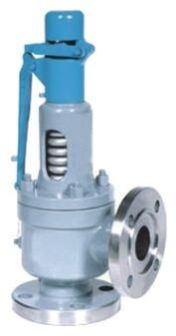
Boiler Safety Valves

  • Min. Order (MOQ) 1 Piece
  • Brand Name Teleflo
  • Country of Origin India
  • Inlet Sizes 1″ to 12″ flanged
  • Inlet Rating (for flanged valves) ANSI Class 150 to 2500
  • Outlet Sizes 1″ to 16″ flanged
  • Outlet Ratings (for flanged valves) ANSI Class 150 and 300
  • Orifice Sizes Sixteen sizes – D through W
  • Set Pressure Range 15 psig to 6250 psig
  • Temp. Range -450°F to 1500°F
  • Materials Carbon Steel Body with Stainless Steel
  • Conforming Standards API RP 520 TO 527
  • Code ASME Section III and VIII
Balanced Bellows

This valve is the same as the conventional design except that a bellows has been added. When the bellows is installed, the educator tube is removed. Caution: It is important that the bonnet be vented to the atmosphere. A bellows is added to the conventional valve to deal with any of several situation.
Back pressure entering the valve through the valve outlet is excessive or variable. If back pressure fluctuates with ±10% of a nominal value, a bellows is required. If a built up back pressure exceeds 10% of the set pressure or cold differential set pressure, a bellows must be used.
If the entering fluid is slurry, highly viscous, or of a nature that it can enter the critical clearances between the guides/disc holders, protect that area with a bellows.
If the fluid being handled is corrosive to the upper works of the valve, isolate the bonnet chamber through use of a bellows. Conventional valves can be easily converted to a bellows design or vice versa through the use of retrofit kits. All valves are balanced bellows designs, meaning that they fully compensate for the effects of back pressure.
Standard safety valves are generally fitted with an easing lever, which enables the valve to be lifted manually in order to ensure that it is operational at pressures in excess of 75% of set pressure.
This is usually done as part of routine safety checks, or during maintenance to prevent seizing. The fitting of a lever is usually a requirement of national standards and insurance companies for steam and hot water applications. A standard or open lever is the simplest type of lever available. It is typically used on applications where a small amount of leakage of the fluid to the atmosphere is acceptable, such as on steam and air systems. Where it is not acceptable for the media to escape, a packed lever must be used. This uses a packed gland seal to ensure that the fluid is contained within the cap

Open BonnetUnless bellows or diaphragm sealing is used, process fluid will enter the spring housing (or bonnet). The amount of fluid depends on the particular design of safety valve. If emission of this fluid into the atmosphere is acceptable, the spring housing may be vented to the atmosphere – an open bonnet. This is usually advantageous when the safety valve is used on high temperature fluids or for boiler applications as, otherwise, high temperatures can relax the spring, altering the set pressure of the valve. However, using an open bonnet exposes the valve spring and internals to environmental conditions, which can lead to damage and corrosion of the spring.

View Complete Details
Tell Us What are you looking for? Will call you back

Contact Us