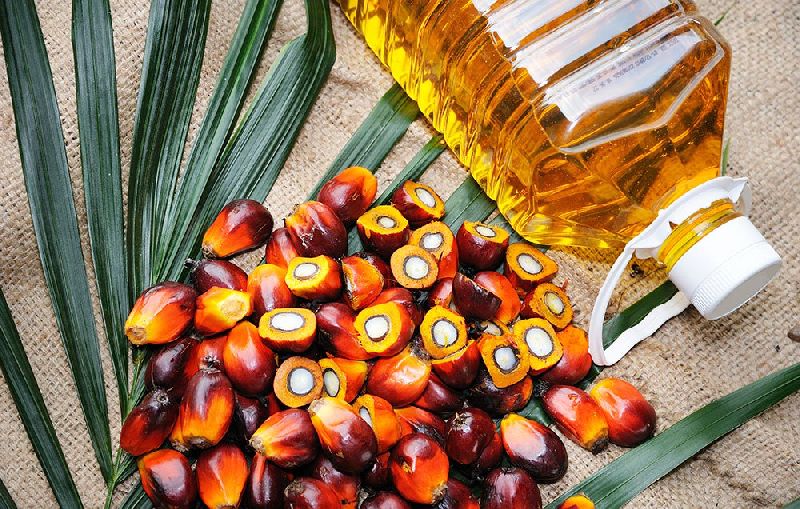
Palm Oil Processing Palm oil is produced from the fruit and kennel of the palm tree. The fruits are first collected and pressed, yielding a rich, dark-red oil which is high in carotene. The oil thus obtained, is exposed to heat through processing and cooking which turn its colour to pale creamy color. Conversion of crude palm oil to refined oil involves removal of the products of hydrolysis and oxidation, colour and flavour. After refining, the palm oil may be fractionated (separated) into liquid and solid phases by thermo-mechanical means (controlled cooling, crystallization, and filtering). A Typical Layout of Palm Oil Processing: Collecting fruits from bunchesCrushing, digestion, and heating of theOil extraction from macerated fruit through hydraulic pressingSeparating fiber from the endocarpSeparating the endocarp from the kernelKernel drying and packingBunches are transported to the millThe fruits are first collected and pressed to obtain crude palm oilThe crude oil is further processed to obtain refined oilRefined oil is further fractionated into liquid and solid phases by thermo-mechanical meansUses of Palm Oil As much as 90% of the palm oil produced finds its way into food products, while remaining 10% is consumed by various industries. It is widely used preparing margarine, shortening, and vegetable cooking oil. In many parts of the world, it is still consumed in its unrefined state to obtain a distinctive colour and flavour. Palm oil is extensively used in preparing dry cake mix used for baking biscuits, cakes and sponge cakes, soaps, sauces, fat substitutes, etc. Recently, palm and kernel oils have been increasingly used as biodiesel fuel. It is also used in producing oleochemical products like:Fatty AcidsFatty EstersFatty Alcohols, etcPalm oil is the reddish-orange oil extracted from the fruit and kennel of a palm tree (Elaeis Guineensis), a native to tropical West Africa. It is the most widely produced vegetable oil in the world. Thi

 San Francisco, United States
 Write a Review
 Mr. James Lee (Takwai Global Corp)
 Share us via









