 Write a Review
Our Products
Our product range contains a wide range of PAPI LIGHTING, POLARIS Portable Lighting System, APPROACH STEADY Lighting System, Floodlight Helipad Lighting System and Packaged Elevated Lighting System
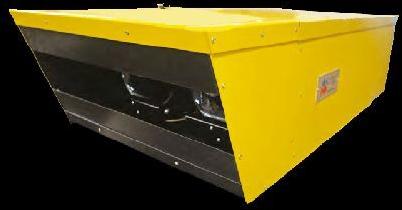
TUNGSTEN HALOGEN TECHNOLOGY
ThePAPI(Precision Approach Path Indicator ) is alightarray positioned beside the runway. It normally consists of four equi-spacedlightunits color-coded to provide a visual indication of an aircraft's position relative to the designated glideslope for the runway.
The PAPI is usually located on the left-hand side of the runway at right angles to the runway center line. The units are spaced 9 meters apart with the nearest unit 15 meters from the runway edge. A PAPI can, if required, be located on the right-hand side of the runway. At some locations PAPIs are installed on both sides of the runway but this level of provision is beyond the requirements of ICAO. The light characteristics of all light units are identical.
Each light unit consists of one or more light sources, red filters and lenses. Each light unit emits a high-intensity beam. The lower segment of the beam is red, and the upper part is white. The transition between the two colours must take place over an angle not greater than three minutes of arc. This characteristic makes the color change very conspicuous, a key feature of the PAPI signal. To form the PAPI guidance signal, the color transition boundaries of the four units are fixed at different angles. The lowest angle is used for the unit furthest from the runway, the highest for the unit nearest to the runway. The designated glideslope is midway between the second and third light unit settings. Depending on the position of the aircraft relative to the specified angle of approach, the lights will appear either red or white to thepilot. The pilot will have reached the normal glidepath (usually 3 degrees) when there is an equal number of red and white lights.
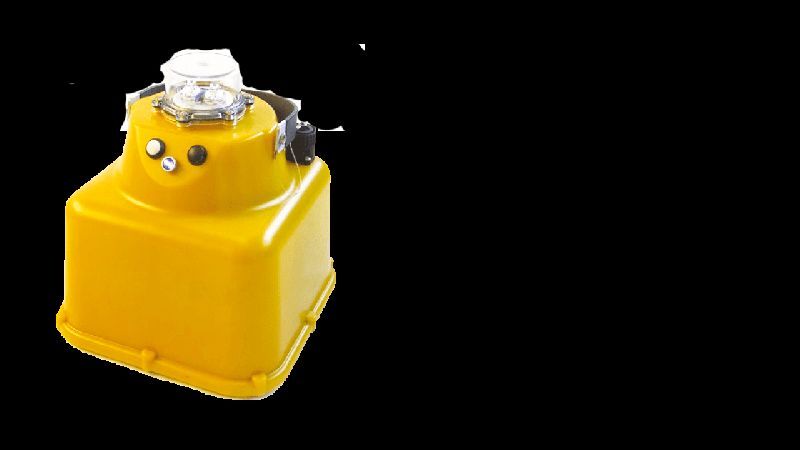
POLARISPortable aviation runway lighting fixture
The POLARIS Portable LED Lighting Kit is used to set-up a temporary or semipermanent lighting system to allow aircrafts or helicopters to land on grass strips, frozen lakes, roadways, or as an emergency runway lighting on major airports.POLARIS can be used as a standalone fitting or as part of a complete transportable runway lighting kit and is available for all relevant applications including:

An approach lighting system should be provided at a heliport where it is desirable and practicable to indicate a preferred approach direction.The approach lighting system shall be located in a straight line along the preferred direction of approach.An approach lighting system should consist of a row of three lights spaced uniformly at 30 m intervals and of a crossbar 18m in length at a distance of 90 m from the perimeter of the FATO. The lights forming the crossbar should be as nearly as practicable in a horizontal straight line at right angles to, and bisected by, the line of the centre line lights and spaced at 4.5 m intervals. Where there is the need to make the final approach course more conspicuous, additional lights spaced uniformly at 30m intervals should be added beyond the crossbar. The lights beyond the crossbar may be steady or sequenced flashing, depending upon the environment.
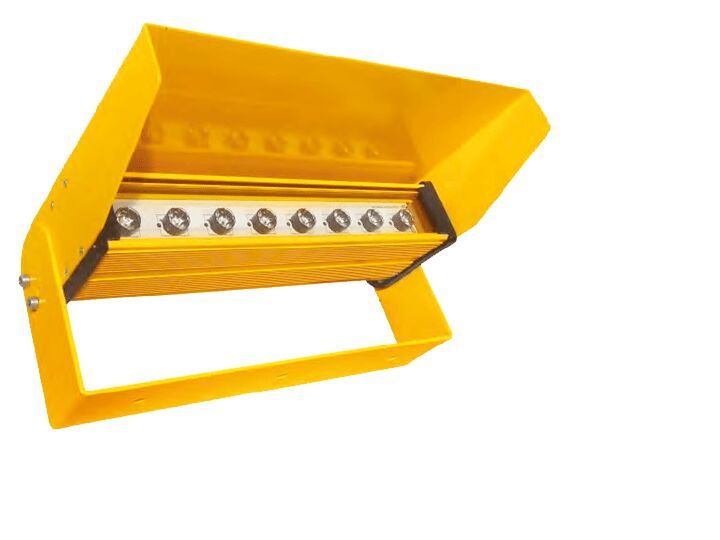
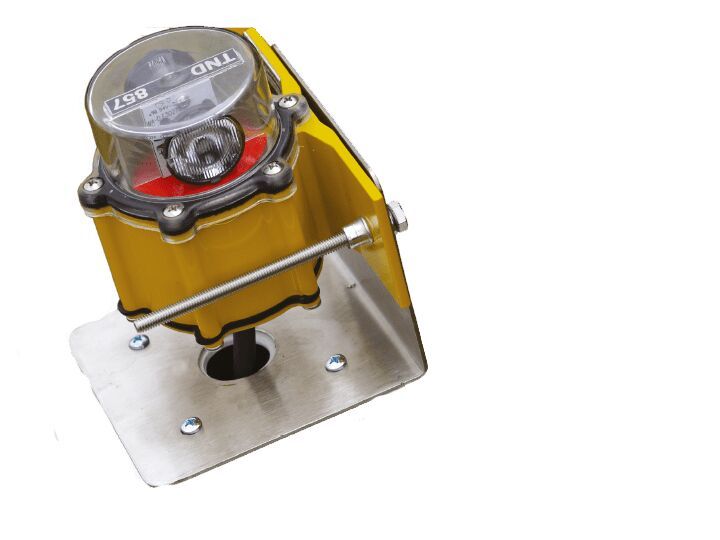
The PEARL (Packaged Elevated Airfield Runway Lighting) System is designed specifically to provide the benefits of LED lighting to visual approach aerodromes such as regional airports, airstrips and military support strips. The PEARL System is to be used by pilots in VMC (Visual Meteorological Conditions) for operations under VFR (Visual Flight Rules).Able to provide the pilot with guidance during approach and landing, whilst considering the meteorological visibility, time of day and approach speeds up to 140 kts, the performance figures achieved by PEARL are equivalent or superior to those specified by CAP 168 in the UK or FAA in the USA.
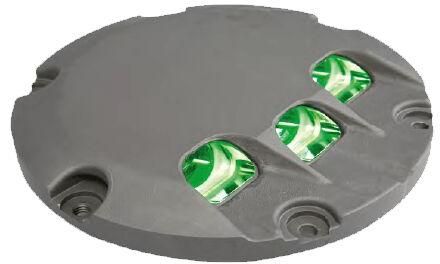
High intensity inset threshold wingbar suitable for use in category I, II and III all weather operation airfield lighting systems. Suitable for use in 6.6A airfield lighting circuits normally supplied from 100W, 200W or 300W isolating transformers.
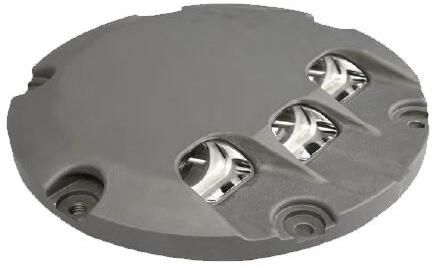
High intensity inset runway approach and crossbar fitting suitable for use in category I, II and III all weather operation airfield lighting systems. Suitable for use in 6.6A airfield lighting circuits normally supplied from 100W, 200W or 300W isolating transformers.
 Vardhman Airport Solutions (Vardhman Airport Solutions)
 315, 114, 115, 116, Syndicate House, 3, Old Rohtak Road, Inderlok, Delhi-110035
 Share us via








