Write a Review
Our Products
We offer the best product range of Mono Propylene Glycol USP.
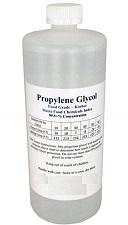
Propylene glycol USP/EP(pharmaceutical grade) is the only grade appropriate for this application due to its handling practices. Propylene glycol USP/EP (pharmaceutical grade) is one of the most widely used formulation-enabling substances.It is used in more than 4000 cosmetic products.
Propylene glycol USP/EP (pharmaceutical grade) provides lipstick with its consistent texture, preserves the homogenous constituency of body lotions containing both oil and water, maintains the long-term fragrance of perfumes, and ensures that shampoos foam nicely.
Applications of propylene glycolUSP/EP (pharmaceutical grade) incosmetics and toiletriesinclude products in:
An ingredient found in many personal-care products like shampoo, hair conditioner, and styling product, propylene glycol is widely used because of its relatively low cost and versatile nature. Its inclusion in a formula can fulfill a variety of purposes, which makes it a popular choice by the cosmetics chemist.
The chemical facts about propylene glycol
Propylene glycol (also known as 1, 2 propanediol) is a relatively small molecule with two alcohol (hydroxyl) groups (-OH). It is a colorless, odorless liquid that is completely water-soluble. PG is a synthetic product obtained from the hydration of propylene oxide, which is derived from petroleum products.
The FDA has categorized propylene glycol as Generally Recognized as Safe.
Even with prolonged direct exposure, there is little to no skin irritation or sensitization. It subsides quickly once the area is flushed. The MSDS recommends avoiding direct handling due to potential irritation, which is a smart recommendation for any chemicalthis is not an indication of the level of toxicity. Remember: in the chemical industry when a worker is exposed to continuous and large quantities of a chemical in its concentrated form, it is imperative to use the strongest safety precautions possible. This is not relevant to consumers using a product by the teaspoonful, if that.
Propylene glycol is non-toxic when ingested, even in reasonably large amounts.
Unlike its dangerous and frequently lethal cousin, ethylene glycol, PG is easily metabolized by the liver into normal products of the citric acid metabolic cycle, which are completely nontoxic to the body. Approximately 45 percent of any ingested PG is excreted directly from the body and never even comes into contact with the liver. The elimination half-life for propylene glycol is approximately four hours, and there is no bio accumulation (buildup in the body over time). A few rare incidents have occurred where a person ingested a large quantity of propylene glycol and suffered some liver and neurological effects as a result, but these were short-lived and subsided once the material was metabolized and excreted.
The FDA has categorized propylene glycol as Generally Recognized as Safe.
Even with prolonged direct exposure, there is little to no skin irritation or sensitization. It subsides quickly once the area is flushed. The MSDS recommends avoiding direct handling due to potential irritation, which is a smart recommendation for any chemicalthis is not an indication of the level of toxicity. Remember: in the chemical industry when a worker is exposed to continuous and large quantities of a chemical in its concentrated form, it is imperative to use the strongest safety precautions possible. This is not relevant to consumers using a product by the teaspoonful, if that.
Propylene glycol is non-toxic when ingested, even in reasonably large amounts.
Unlike its dangerous and frequently lethal cousin, ethylene glycol, PG is easily metabolized by the liver into normal products of the citric acid metabolic cycle, which are completely nontoxic to the body. Approximately 45 percent of any ingested PG is excreted directly from the body and never even comes into contact with the liver. The elimination half-life for propylene glycol is approximately four hours, and there is no bioaccumulation (buildup in the body over time). A few rare incidents have occurred where a person ingested a large quantity of propylene glycol and suffered some liver and neurological effects as a result, but these were short-lived and subsided once the material was metabolized and excreted.
 Toni (AFRICAN SHOP L.L.C)
 118-223 Ayal Nasir, Dubai, United Arab Emirates, United Arab Emirates
 Share us via