Our Products
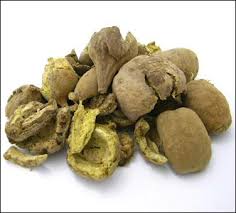
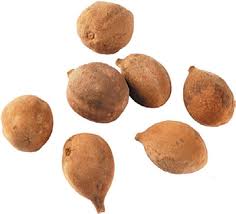
We offer a complete product range of Organic Bhringraj (Organic Eclipta Alba), Organic Pippali (Organic Piper Longum), Organic Ashoka (Organic Saraca Indica), Organic Mandukaparni Leaves (Organic Centella Asiatica) and Organic Baheda (Organic Terminalia Bellirica)
Additional Information:
Payment Terms : T/T
Delivery Time : 10 to 15 Days
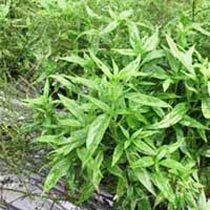
Details :
Andrographis paniculata is an erect annual herb extremely bitter in taste in all parts of the plant body. The plant is known in north-eastern India as Maha-tikta, literally "king of bitters", and known by various vernacular names (see the table below). As an Ayurveda herb it is known as Kalmegh or Kalamegha, meaning "dark cloud". Kalmegh has been used for liver complaints and fever, and as an anti-inflammatory and immunostimulant. In clinical trials, Andrographis extract has been studied for use as an immunostimulant in upper respiratory tract infections and HIV infection. The potential of andrographolide as an anticancer agent is being investigated. Andrographolide is the major constituent extracted from the leaves of the plant and is a bicyclic diterpenoid lactone.
Details :
Terminalia bellirica, known as "Bahera" or Beleric or bastard myrobalan, is a large deciduous tree common on plains and lower hills in Southeast Asia, where it is also grown as an avenue tree.
The leaves are about 15 cm long and crowded toward the ends of the branches. It is considered a good fodder for cattle. Terminalia bellirica seeds have an oil content of 40%, whose fatty-acid methyl ester meets all of the major biodiesel requirements in the USA. The pulp of the fruit (Beleric myrobalan) is considered by physicians to be astringent and laxative, and is prescribed with salt and long pepper in affections of the throat and chest.
As a constituent of the triphala (three fruits), i.e., emblic, beleric and chebulic myrobalans, it is employed in a great number of diseases, and the kernel is sometimes used as an external application to inflamed parts.
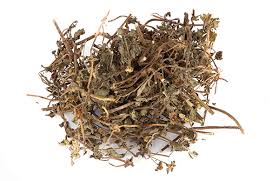
Details :
Eclipta Alba known as ‘Bhringraj’ in sanskrit/hindi and ‘kehraj‘ in Assamese and karisalankanni in Tamil. It grows commonly in moist places as a weed all over the world. It is widely distributed throughout India, China, Thailand, and Brazil. In the Ayurvedic System, Eclipta Alba, as with all other herbs, is classified according to its qualities, taste, physiological effects, etc. Ayurveda states that it is: Taste – Katu (Bitter), Tikta (Pungent) Quality – Rooksha (Dry), Laghu (light to digest) Energy - Ushna (Hot) Post Digestive Effect - Pungent, i.e. undergoes a pungent taste conversion after digestion. According to Ayurveda, these qualities characterize the medicinal effects of Eclipta Alba on the body, and are expressed in Ayurvedic terms as balancing for Kapha, i.e. balancing for the moist and unctuous tissues and anabolic systems of the body such as fats and fluids, and balancing for Vata, i.e. the nervous system and catabolic functions.
The leaf extract is considered a powerful liver tonic, rejuvenative, and especially good for the hair. A black dye obtained from Eclipta alba is used for dyeing hair and tattooing. Eclipta alba also has traditional external uses, like athlete foot, eczema and dermatitis, on the scalp to address hair loss and the leaves have been used in the treatment of scorpion stings.
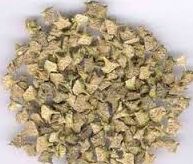
Details :
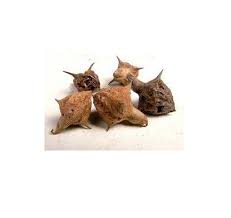
Tribulus terrestris is an annual plant in the caltrop family (Zygophyllaceae) widely distributed around the world, that is adapted to grow in dry climate locations in which few other plants can survive. In Ayurvedic pharmacology, tribulus terrestris is used as a powder form of the aerial parts, particularly the fruits, and it is known in Sanskrit as gokshura, meaning the "cow's hoof", possibly because the small thorns tend to get stuck on grazing animals. Nevertheless, an unrelated plant, pedalium is also known as gokshura, more specifically as bada gokshura ("big cow's hoof"), whereas the gokshura proper is referred to as chhota gokshura ("small cow's hoof"). The two herbs are often found mixed in powder blends used.
Gokshura is believed to contribute to overall physical, as well as sexual, strength by building all the tissues, especially shukra dhatu (reproductive tissue) but it is not considered as a particular vajikarana (sexual functions) herb. It is believed to be useful in kidney, bladder, urinary tract and uro-genital related conditions, where it is said to act as a diuretic.
One chemical compound found in T. terrestris is protodioscin (PTN). Also, T. terrestris was shown to have strong inhibitory activity on COX-2. Two alkaloids commonly found in Tribulus terrestulis are the beta-carboline alkaloids harman (harmane) and norharman (norharmane). Another phytosterol that is found in T. terrestris is called hecogenin. Hecogenin has application in the synthesis of 11-oxaethisterone.
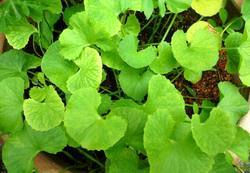
Details :
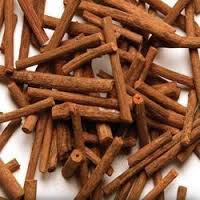
Centella asiatica, commonly known as centella and gotu kola, is a small, herbaceous, frost-tender perennial plant of the family Mackinlayaceae or subfamily Mackinlayoideae of family Apiaceae, and is native to wetlands in Asia. It is used as a medicinal herb in Ayurvedic medicine, traditional African medicine, and traditional Chinese medicine. It is also known as the Asiatic pennywort or Indian pennywort in English, among various other names in other languages.
Mandukparni is used in Ayurveda as is Medhya Rasayana and works on mind for the improvement of intellect. It is also indicated in swelling, low appetite, fever, skin diseases, bleeding disorders, urinary disorders, asthma, anemia and diseases due to vitiation of blood. Mandukaparni contains triterpenoid saponins—brahmoside, thankuniside, alkaloids (hydrocotyline), bitter principles (vellarin) and asiaticoside. It contains not less than 0.5 per cent of asiaticoside, calculated on the dried basis.Asiaticoside, shows beneficial effects in leprosy and skin diseases. It reduced the number tubercular lesions in the liver, lungs, nerve ganglia and spleen in experimental animals. It seems to elevate blood glucose, triglycerides and cholesterol levels and to decrease blood urea nitrogen and acid phosphatase levels. Brahmoside, is reported to exhibit tranquilizing and anabolic activity.
Details :
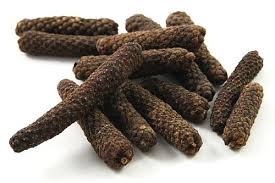
Rubia cordifolia, often known as common madder or Indian madder, is a species of flowering plant in the coffee family, Rubiaceae. It has been cultivated for a red pigment derived from roots. It can grow to 1.5 m in height.
The evergreen leaves are 5–10 cm long and 2–3 cm broad, produced in whorls of 4-7 starlike around the central stem. It climbs with tiny hooks at the leaves and stems.
Rubia cordifolia was an economically important source of a red pigment in many regions of Asia, Europe and Africa. It was extensively cultivated from antiquity until the mid nineteenth century. The plant's roots contain an organic compound called Alizarin, that gives its red colour to a textile dye known as Rose madder. Manjishta is a famous herb for blood detoxifying. Its root is extensively used in many skin disease medicines of Ayurveda.
Details :
Long pepper (Piper longum), sometimes called Indian long pepper (Pipli), is a flowering vine in the family Piperaceae, cultivated for its fruit, which is usually dried and used as a herb, spice and seasoning. Pippali is known for Detoxifying the lungs. It helps in Removing Cold and Congestion.It also helps to Rejuvenate the Lungs and Kapha dosha, it even helps in expelling out the mucus accumulated in the respiratory tract.Trikatu (it contains Pippali as one of its three contents) is one of the most popular formulation used to mitigate the disease that occurs due to kapha dosha, it digest AMA (endotoxin) and it also increases the bioavailability of the drug , when it is used as a complementary medicine.It reduces the frequency of paroxysm, which causes the infection. Long pepper is known to contain the chemical compound piperlongumine.
Details :
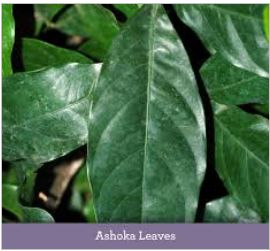
(Organic ashoka-Organic saraca indica) Ashoka tree contains haematoxylin, tannin, iron, catechol, silica, potassium, magnesium, calcium, glycoside and many more given below.The bark of plant presence of epicatechin, procyanidin, deoxyprocyanidin B, catechin, methyl-cholesta, ethycholesta, Dglucoside, leucopelargonidin and leucocyanidin.The flower part of plant contain Oleic, linoleic, palmitic and stearic acids, P-sitosterol, quercetin, kaempferol- 3-0-P-D- glucoside, quercetin- 3-0-P-D-glucoside, apigenin- 7-0-p-D-glucoside, pelargonidin- 3, 5-diglucoside, cyanidin-3, 5- diglucoside, palmitic, stearic, linolenic, linoleic, p and y sitosterols, leucocyanidin and gallic acid.Seed and Pod contains oleic, linoleic, palmitic and stearic acids, catechol, epicatechol and leucocyanidin.Ashoka leaves, flower and bark has antibacterial properties can be used to cure bacterial infections.
Antimenorrhagic Activity : Saraca asoca dried bark has been used for menorrhagia in India. In India Saraca asoca dried bark as well as flower is given as a tonic to ladies in case of Uterine disorders. Saraca asoca stem bark also used to treat all disorder associated with the menstrual cycle. Ashoka is an astringent and analgesic agent. Astringent property can be used to treat womb problems along with other medicine.
Anticancer Activity : The anticancer principle from Saraca asoca flowers indicated 50 percent cytotoxicity (in vitro) in Dalton’s lymphoma ascites and Sarcoma-180 tumour cells at a concentration of 38 mug and 54 mug respectively, with no activity against normal lymphocytes but preferential activity for lymphocytes derived from leukaemia patients.
 MR. VIJAY KUMAR (JANKILAL DHULCHAND GARG (A SEED & AN ORGANIC HERB COMPANY))
 31,Tilak Marg, Po-neemuch, Neemuch Chawni, Madhya Pradesh - 458441, India
 Share us via









 Write a Review